

Tucson heat exceeding 105°F reduces radiator cooling efficiency by up to 35%, causing rapid coolant additive breakdown and plastic end-tank embrittlement. Low-airflow campus commuting causes thermal pressure surges that risk cylinder head warping. Annual shop inspections utilizing static pressure tests, optical refractometer readings, and fan duty-cycle diagnostics prevent catastrophic engine failure.
Imagine idling in your car along East 6th Street in mid-July while the ambient pavement temperature radiates past 110°F. Under those conditions, your engine’s cooling system isn’t just working hard, it is operating right on the edge of thermal limits. Extreme Sonoran Desert heat paired with short, stop-and-go drives around the University of Arizona campus rapidly degrades your coolant, turns plastic radiator parts brittle, and can leave you stranded with a warped engine block before a dashboard warning light even flickers.
Why Sonoran Desert Heat Is So Hard on Your Car
Driving in Tucson during the hot summer months puts continuous thermal stress on your car. When the outside air passing through your front grill is over 105°F, it cannot absorb heat from your engine nearly as fast as it does in cooler weather, making routine preventative maintenance essential.
This drop in cooling efficiency is especially tough when idling in traffic on East 6th Street or sitting in the Park Avenue parking structure. Without constant airflow from driving at highway speeds, heat gets trapped under the hood.
Over time, heat wears out the protective anti-corrosion additives in your coolant. Once these protective chemicals break down, rust and mineral scale build up inside the tiny fluid channels in your engine. These deposits trap heat inside critical metal engine parts long before a warning light ever illuminates on your dashboard.
Simple Signs Your Cooling System Is Failing
I regularly see cars that look fine on the outside but are on the verge of an expensive breakdown. Here are four warning signs you can check yourself:
- Spongy or Hard Hoses: If the main rubber hoses connected to your radiator feel soft and squishy or stay crushed after you squeeze them, the rubber inner lining is breaking down.
- Fine Cracks on Plastic Parts: Look at the plastic tanks attached to the sides of your radiator. Tiny spiderweb-like cracks along the edges mean the radiator parts have become brittle from heat and could snap under pressure.
- Corrosive Electrical Flow in Your Fluid: As coolant ages, it can start carrying a mild electric charge that eats away at internal metal parts. When I run a test with a multimeter showing an electrical charge above 0.3 volts, it tells me the coolant is actively corroding your engine due to issues that require proper electrical troubleshooting.
- Uneven Temperatures Across the Radiator: When measured with an infrared temperature reader, a healthy radiator should be 15°F to 25°F cooler at the outlet side than at the inlet side. If I measure a difference under 10°F, internal passages are likely clogged.
Why Short Campus Commutes Cause Unexpected Problems
Taking quick trips under two miles across campus or down Speed Boulevard doesn’t give your engine enough time to reach its proper operating temperature and stay there long enough to burn off internal moisture. At the same time, frequent stop-and-go driving means your radiator isn’t getting steady airflow to stay cool.
This combination of quick heat spikes and low airflow creates heavy pressure surges inside your cooling system. Your radiator cap is designed to hold around 16 to 20 pounds of pressure to keep the fluid from boiling. When heat surges without good airflow, that buildup of pressure forces weak rubber hoses and brittle plastic radiator parts to crack or burst open.
How To Diagnose Your Cooling System
Rather than guessing or replacing parts unnecessarily, a proper cooling system inspection follows three precise diagnostic steps:
- System Pressure Test: A hand pump pressurizes the system to its exact factory rating (usually 18 pounds of pressure) for a 15-minute observation window. If the gauge drops, it signals a hidden leak, such as an internal head gasket failure or a weeping heater core, even without visible drips under the car.
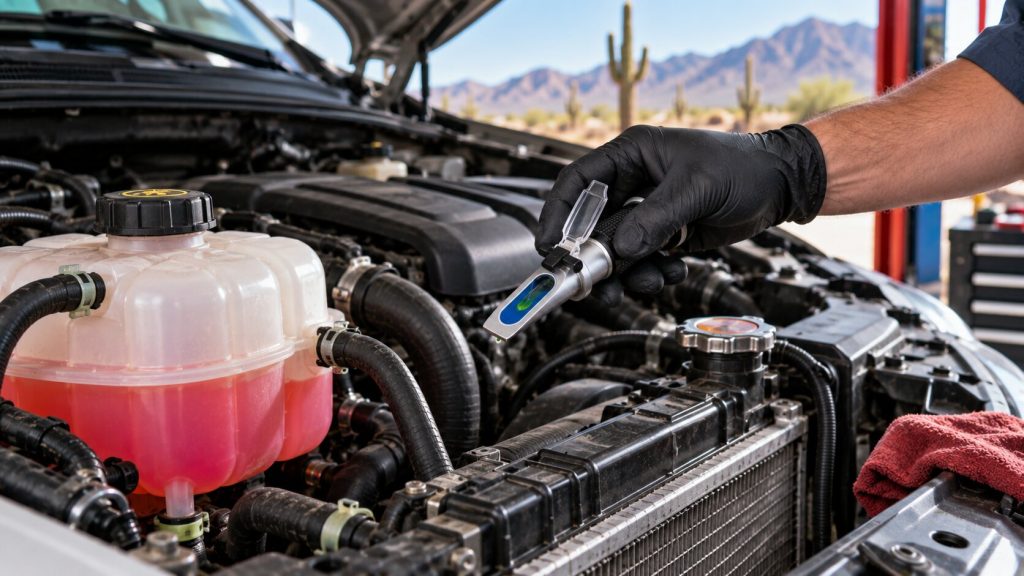
- Coolant Strength & Chemistry Check: Using a precision optical refractometer, I measure the exact coolant-to-water ratio. Driving in Tucson demands a balanced 50/50 or 60/40 mix so the fluid maintains a boiling point of at least 265°F under pressure.
- Electric Cooling Fan Check: With a diagnostic scan tool, the electric cooling fan is commanded to run at full speed to verify the motor isn’t dragging or failing under severe desert heat loads.
Replacing Your Radiator Before Heat Causes Engine Damage
Modern radiators combine lightweight aluminum centers with plastic side tanks. When those plastic end tanks crack, they cannot be patched or glued back together reliably, they must be replaced.
When I replace a worn-out radiator, I always install a new thermostat rated to factory specs, flush out any remaining degraded fluid, and fit a brand-new radiator cap. Radiator cap internal springs weaken after 3 to 5 years of desert heat, making a fresh cap essential for holding proper system pressure.
Schedule Your Cooling Inspection
Avoiding a roadside breakdown along Campbell Avenue starts with verifying system pressure and fluid health. Bring your vehicle to my shop at 843 S Campbell Ave, Tucson, AZ 85719 for a complete system evaluation. Schedule a visit with me at Accurate Service Auto Repair to make sure your engine is prepped for the summer heat.
Frequently Asked Questions
How often should I have my cooling system inspected in Tucson?
Once a year. Sonoran Desert heat breaks down coolant protection and hardens rubber hoses much faster than normal weather conditions. An annual check helps catch hidden pressure loss and fluid breakdown before summer temperatures hit triple digits.
Can I drive my car if the temperature gauge starts rising?
No. Running an engine with an overheating temperature gauge for even 60 seconds can permanently warp metal engine parts or blow a head gasket. Safely pull over, turn off the ignition immediately, and let the engine cool completely before checking anything.
Why is my car overheating even though the coolant reservoir is full?
A full reservoir does not mean fluid is properly circulating. A stuck thermostat valve, a damaged water pump, trapped air pockets, or a clogged radiator core can block fluid flow through the engine while leaving the coolant tank looking completely full.
Can I top off my coolant with regular tap water in Tucson?
No. Tucson tap water has a high mineral content that creates scale deposits inside your radiator and engine block when exposed to extreme heat. Always use a pre-mixed 50/50 coolant blend or distilled water to avoid clogging internal fluid passages.
