

Summer drives along I-10 toward Phoenix or isolated stretches through the Sonoran Desert place severe thermal loads on your vehicle. Checking your cooling system before leaving Tucson prevents sudden radiator failures, blown hoses, and severe engine overheating in remote desert corridors.
Plastic radiator tanks on light-duty passenger vehicles routinely crack open along the seam during sustained 75 mph highway cruises through the Tucson heat. When outside temperatures climb past 100°F and asphalt radiates heat up to 150°F, your vehicle’s cooling components work under maximum pressure to push heat away from the engine.
Why Desert Heat Destroys Radiators and Coolant Seals
Your vehicle’s cooling system relies on a balance of pressure, liquid flow, and surface area to keep engine temperatures stable. Under normal conditions, a 50/50 mix of ethylene glycol and distilled water absorbs internal heat and releases it through the radiator’s aluminum cooling fins. When ambient air temperatures soar, the temperature difference between the fluid inside and the outside air shrinks, making it much harder for the radiator to shed that thermal energy.
As your engine heats up, coolant expands and builds sustained internal pressure up to 15 PSI (pounds per square inch). Constant temperature shifts over time loosen the radiator’s plastic ends, creating tiny cracks right along the metal crimp line. This intense temperature gap between 200°F+ internal fluid and searing desert air causes the aluminum fins to expand and contract unevenly, weakening internal tube joints and rubber hoses from the inside out.
Once a hose softens or a seam opens, system pressure drops instantly, causing the coolant to boil violently at a lower temperature. Without pressurized liquid circulating continuously, intense heat builds in the cylinder head within seconds, warping precision metal surfaces and blowing head gaskets before you can safely pull off the highway.
Key Inspection Points Before Driving into the Sonoran Desert
- Radiator Tank Seams and Core Condition: Check plastic side tanks for faint discolored stress lines, dried white or green crusty fluid traces, and crushed cooling fins that restrict incoming airflow.
- Coolant Chemical Integrity: Test fluid pH (a level below 7.5 signals high acidity) and concentration with refractometers and corrosion strips rather than relying on color, ensuring adequate boil-over protection above 265°F.
- Hose Flexibility and Wall Swell: Squeeze upper and lower radiator hoses while cold to detect spongy spots, internal wall delamination, or hardened brittle rubber near clamp connections.
- Pressure Cap Sealing Ring: Inspect the spring and rubber gaskets on your radiator cap for cracking or flattening, as a weak cap fails to maintain the 15 PSI threshold required to prevent early boiling.
- Thermostat and Fan Activation: Verify that mechanical and electric cooling fans kick into high speed promptly when engine temperatures rise during extended idling periods.
How Our Technicians Inspect Your Cooling System
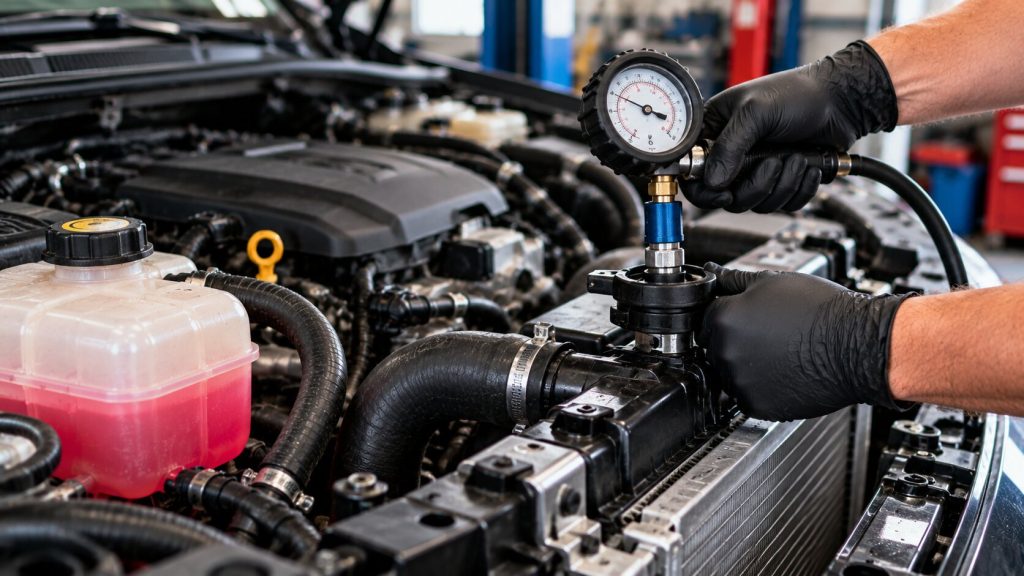
Proper diagnostic testing removes guesswork by identifying hidden stress points before you hit the highway. We connect a pressure tester to your cold radiator neck and pressurize the system to its rated 15 PSI limit, holding it for 15 minutes to reveal minor hairline leaks that only open under heavy thermal load.
Next, we evaluate fluid chemistry with a digital refractometer to measure exact freezing and boiling points rather than guessing by fluid color. Chemical test strips check for acid accumulation and stray electric currents (electrolysis) that slowly dissolve internal aluminum passages. Finally, thermal imaging cameras track real-time coolant circulation across the radiator core, identifying restricted internal passages by detecting localized cold spots.
Protect Your Desert Journey with Professional Inspection
Taking time for a thorough cooling system check at Accurate Service Auto Repair ensures your vehicle is fully prepared for extreme desert heat. Locating a hidden hairline fracture or soft hose in the shop helps you avoid a sudden roadside breakdown on remote stretches of I-10 or Highway 86.
Our technicians bring years of local, hands-on experience to every diagnostic evaluation. Stop by our facility at 843 S Campbell Ave, Tucson, AZ 85719 or book your pre-trip service online today.
Frequently Asked Questions
How often should I flush my vehicle’s coolant in Tucson?
Every 30,000 to 50,000 miles or three years. However, in Tucson’s severe desert climate, checking chemical degradation annually helps catch internal acid buildup before major trips.
Can I top off my radiator with plain tap water before a long trip?
No, never top off with plain tap water. Tap water contains minerals like calcium that form scale deposits inside narrow radiator tubes under intense heat, blocking coolant flow and causing localized overheating.
What are the early warning signs that my radiator is failing?
Low coolant levels without visible ground puddles, faint sweet chemical smells after parking, and sudden temperature spikes while idling in traffic. Small crusty white or colored deposits along plastic tank crimps also signal slow pressure leaks.
Why does my engine temperature rise only when running the AC?
The AC condenser is mounted directly in front of the radiator and releases severe heat onto it. If your radiator core is partially clogged or your cooling fan is weak, the system cannot shed this combined thermal load.
