

Replacing a radiator requires a complete coolant flush to prevent immediate thermal breakdown under severe desert heat. Reusing degraded fluid introduces rust, scale, and acids that corrode fresh aluminum cores and damage water pumps. Complete system flushing removes contaminants, restores protective additives, and ensures long-term cooling efficiency.
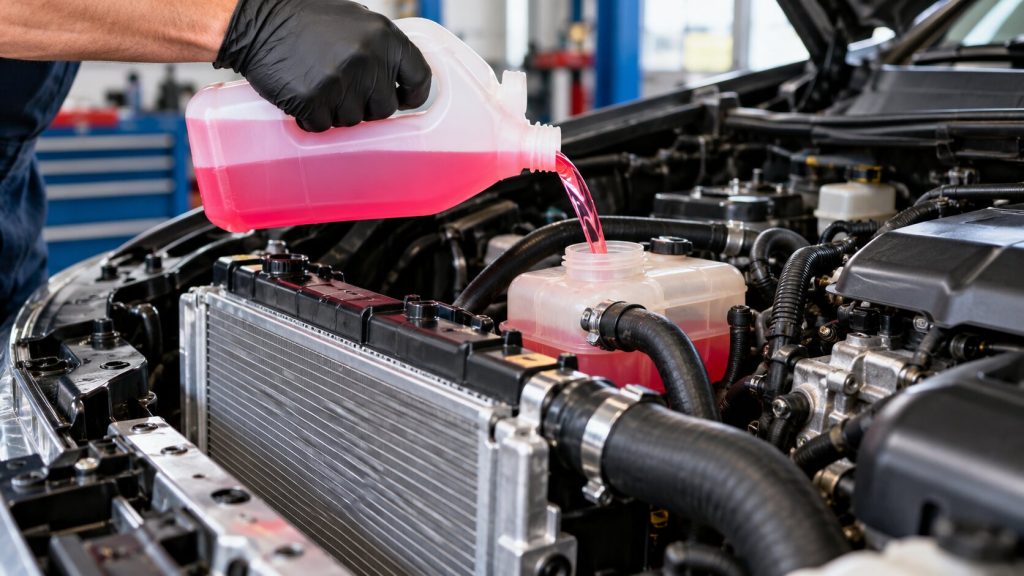
Fixing a compromised radiator addresses an immediate leak, but leaving aged fluid inside your engine loop creates a new set of risks. Fresh aluminum cores paired with degraded glycol rapidly develop galvanic corrosion, clogging narrow internal passages before the summer driving season even hits. We ensure your cooling loop gets completely cleared of rust particulates, heavy minerals, and degraded additives so your new components perform reliably.
The Danger Of Running Old Fluid In A New Radiator
A fresh radiator installed alongside old coolant exposes new internal metal surfaces to accumulated rust particles, suspended debris, and depleted chemical inhibitors. As your engine cycles up to operating temperature, those leftover contaminants settle straight into the thin heat-transfer tubes of your new core.
Acids that form as engine fluid ages actively attack core solder and thin aluminum walls. We routinely hook up a digital multimeter to test degraded fluid, frequently finding over 0.40 volts running through aged glycol. Anything above 0.10 volts means the fluid acts like a battery cell, creating chemical pitting that eats through a fresh 0.8mm core tube within 12 months.
How Tucson Heat Accelerates Cooling Failure
Monsoon humidity combined with triple-digit summer pavement temperatures pushes your engine cooling setup to its absolute physical limits. Heavy stop-and-go driving along Campbell Avenue or long climbs up Mount Lemmon cause sudden heat-soaking inside the engine block.
Under these extreme desert conditions, water content within degraded fluid boils off faster, leaving behind concentrated mineral deposits. These hard mineral scale deposits coat the inside of your engine water jacket, insulating heat inside the block rather than transferring it out.
What Happens During A Professional Coolant Flush Services Session
A standard drain-and-fill only removes roughly half of the total fluid volume, leaving dirty liquid trapped inside the heater core and engine block. A full fluid service uses specialized pressure equipment to push clean fluid through every internal passage.
- System Pressure Test: We test the loop at 15 to 20 PSI to verify sealed connections before introducing fresh fluid.
- Chemical Detergent Circulation: Specially formulated cleaners circulate through to dissolve stubborn scale buildup and sludge deposits.
- Reverse Direction Backflush: Clean fluid flows opposite to normal operation, dislodging trapped particulate matter from narrow passages.
- Precision Refill & Bleeding: Fresh, vehicle-specific fluid mixes with distilled water while air pockets get completely bled out to restore a healthy 8.0 to 9.0 pH balance.
Key Signs Your Cooling Loop Needs Attention
- Temperature gauge needle rising higher than normal during idling periods
- Sweet-smelling steam coming from under the hood after shutting off the vehicle
- Dark, cloudy, or gritty fluid visible inside the expansion reservoir
- Cabin heater failing to blow warm air during winter mornings
- Flakes of rust or dried chemical residue around hose connections
Preventing Secondary Damage To Engine Components
Running dirty fluid through a newly installed radiator does not just harm the core itself; it endangers your entire powertrain. Water pump impellers suffer cavitation damage when forced to circulate fluid filled with suspended abrasives and grit.
Thermostats can also bind or stick open when coated in heavy chemical sludge, preventing your engine from reaching proper operating temperatures. A complete system flush during radiator replacement protects the water pump seals, heater core, head gaskets, and thermostat simultaneously.
Protect Your New Radiator From Desert Heat
Ignoring complete fluid maintenance during major cooling repairs invites unexpected breakdowns along remote desert highways. At Accurate Service Auto Repair, we provide thorough system testing, precise fluid exchanges, and reliable repair work tailored specifically to Tucson driving conditions. Bring your vehicle to our shop at 843 S Campbell Ave, Tucson, AZ 85719 or call us to schedule your complete cooling system evaluation today.
Frequently Asked Questions
Can I just top off my fluid instead of doing a complete flush?
No. Topping off fluid only dilutes accumulated contaminants and does not clean out internal scale or rust deposits. A complete fluid exchange cleans the entire loop, ensuring your fresh components receive proper corrosion protection.
How often should desert drivers schedule a coolant flush?
Most manufacturers suggest servicing fluid every two to three years, but local climate conditions can shorten that timeframe. Regular testing during oil maintenance helps identify fluid breakdown before overheating occurs.
Will running water instead of proper fluid mixture damage my new radiator?
Yes. Straight tap water contains heavy minerals that cause rapid scale buildup and severe galvanic corrosion inside aluminum cores. Always use a proper mixture of distilled water and the exact fluid specification recommended for your vehicle.
How long does a radiator replacement and fluid service take?
Most standard radiator replacements paired with a complete system flush are completed within a single business day. Complex engine bays or custom setups may require additional diagnostic testing to ensure all air pockets are bled out completely.
