

Modern vehicle overheating often stems from electronic sensor failures, wiring damage, or fan control glitches rather than mechanical radiator faults. Tucson’s intense heat degrades under-hood electronics, triggering false temperature warnings. Computer diagnostics analyze live sensor data and electrical circuits to pinpoint exact failures, preventing costly, unnecessary part replacements.
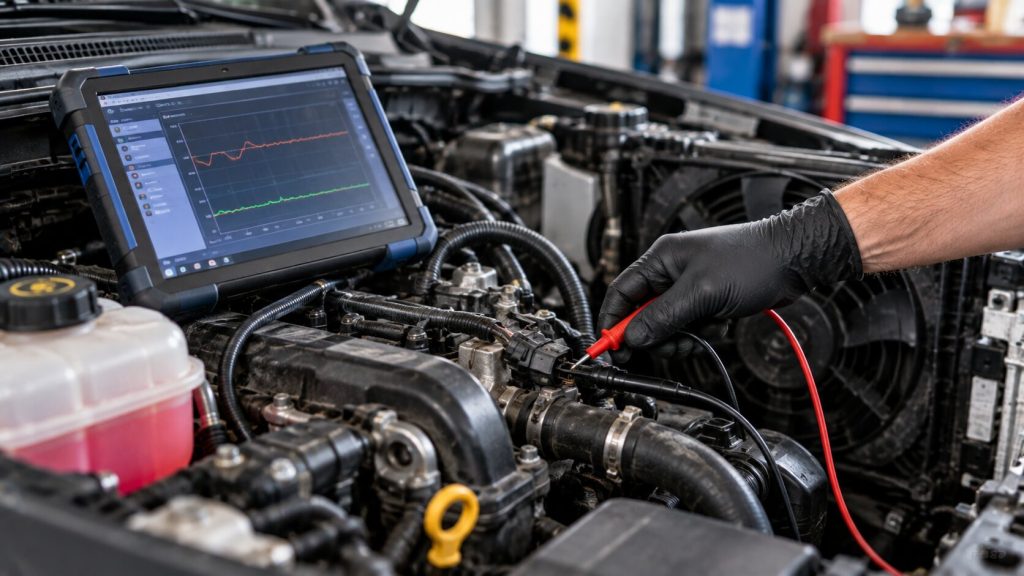
When a car begins to overheat on a hot Tucson afternoon, most drivers assume the radiator has failed. During digital diagnostics checks, however, I frequently find that thermal problems are caused by a failing electronic sensor, a loose wiring connector, or a misbehaving electric fan controller. Modern cooling systems rely heavily on computers, and using digital diagnostics helps me pinpoint the exact cause of an issue before you spend money on parts you don’t actually need.
How Your Car’s Computer Monitors Engine Temperature
Modern engines rely on electronic temperature sensors (called thermistors) that sit directly in the path of engine coolant. Instead of moving a mechanical valve directly, these sensors measure fluid heat and send a continuous low-voltage electrical signal back to the main engine computer.
The computer reads these electrical signals to make real-time operational decisions:
- Turning on the cooling fan: Adjusting the electric fan speed based on how hot the engine is running.
- Adjusting engine tuning: Fine-tuning fuel delivery and spark timing to keep the engine running efficiently.
- Triggering warning lights: Illuminating the dashboard temperature light or Check Engine light if signals fall outside safe ranges.
If a sensor degrades or a wire corrodes, the computer receives false information. It might assume the engine is cold when it is actually overheating or it might trigger a false panic on your dashboard when the engine is completely fine. Connecting my factory-level scan tool allows me to read these raw electronic signals directly and compare them against physical temperature measurements to see what is really happening.
Desert Heat and Tucson Thermal Stress on Vehicle Electronics
Summers in Tucson present a unique challenge for under-hood electronics. When ambient outdoor temperatures exceed 110°F, heat trapped inside a stopped engine bay can easily top 240°F. Over time, I see this intense heat soak cause delicate components to degrade:
- Plastic and Rubber Breakdown: Sensor housings and wiring insulation grow brittle, forming tiny micro-cracks that let in dust and moisture.
- Monsoon Corrosion: Sudden humidity and moisture during monsoon season creep into cracked connectors, oxidizing the metal pins inside and disrupting electrical signals.
- Intermittent Failures: Heat causes metal contacts to expand and separate, creating electrical glitches that only show up when the car gets hot on local drives down Campbell Avenue or climbing up toward the Catalina Foothills.
A visual inspection under the hood rarely reveals these microscopic electrical faults. Scanning the computer system while the engine runs allows me to isolate where the electrical signal breaks down under real-world driving conditions.
Clear Signs Your Car Needs Digital Cooling Diagnostics
- Rapid Gauge Sweeps: The dashboard temperature needle bounces wildly between hot and cold within a few seconds.
- Unusual Fan Behavior: Your radiator fan runs at maximum high-speed noise the moment you start the car cold, or continues running long after you turn off the key.
- Check Engine Light On: A warning light appears alongside erratic temperature readings or rough engine idling.
- Poor Fuel Economy: The engine burns noticeably more gas because a faulty sensor is falsely telling the computer that the engine has never warmed up.
Diagnostic Steps to Isolate Cooling Failures
- Live Data Comparison: Connecting a diagnostic computer to the vehicle allows me to stream real-time temperature data while cross-checking physical engine temps with a calibrated thermal laser camera. If the computer reads 240°F while the radiator hose measures only 190°F, it immediately confirms the sensor is giving a false reading.
- Testing Electric Fan Controls: Using bi-directional testing tools, direct commands are sent from the diagnostic computer to test the electric fan at 25%, 50%, and 100% output. This process ensures both the fan motor and its electronic control module respond correctly under load.
- Wiring and Voltage Testing: I test electrical resistance along the wire harness using a digital multimeter. This step verifies that electric current flows cleanly through the system without being restricted by corroded connectors, broken insulation, or loose ground wires.
- System Pressure Testing: Calibrated pressure is applied to the cooling loop to verify mechanical integrity. This isolates whether micro-leaks exist in the radiator, water pump, or engine head gaskets before signing off on the repair.
Preventing Secondary Engine Damage
Driving with an unresolved electronic cooling fault can quickly cause real, expensive mechanical damage:
- Excess Fuel Washing: If a bad sensor tells the computer the engine is permanently freezing, the computer continuously floods the engine with extra fuel. This unburned fuel washes protective oil off the cylinder walls and ruins the catalytic converter.
- Warped Engine Components: If a sensor fails to tell the computer to turn on the electric cooling fan, the engine can experience sudden thermal surges that warp aluminum cylinder heads and blow head gaskets.
Catching an electronic glitch early ensures your cooling system works as designed, preventing thousands of dollars in compounding engine repairs.
Complete Cooling Diagnostics in Tucson
Don’t guess which part failed when your dashboard warning lights turn on. At Accurate Service Auto Repair, I use advanced digital diagnostic equipment to isolate whether your cooling issue stems from an electronic glitch or a true mechanical fault. Identifying the exact failure point helps me prevent unnecessary repairs and keeps your engine running reliably through Tucson’s toughest heat. Visit me at 843 S Campbell Ave, Tucson, AZ 85719 for live digital diagnostics and cooling system testing.
Frequently Asked Questions
Can a faulty computer sensor cause my engine to overheat?
Yes. A faulty coolant temperature sensor can cause physical overheating if it sends a false low-temperature reading to the main engine computer, preventing the computer from turning on the electric radiator fan when the engine gets hot.
How do I know if my radiator is failing or if it is just a sensor issue?
A failing radiator typically shows physical coolant leaks, steam, or cold spots across its surface when I test it with a thermal camera. A sensor issue usually causes rapid dashboard gauge fluctuations, inconsistent computer readings, or warning lights while the radiator itself remains structurally sound.
What happens if an electric cooling fan fails to turn on?
When an electric cooling fan fails to engage, engine coolant cannot release heat while idling or driving at low speeds, causing rapid thermal spikes. This failure is frequently triggered by a blown fan relay, a damaged wiring harness, or a faulty engine computer signal rather than a broken fan motor itself.
Is it safe to drive my car if the temperature light comes on intermittently?
No. Even an intermittent light indicates an active cooling glitch or thermal surge. Driving while the cooling system is unmonitored can warp engine components and cause severe gasket failure within just a few miles.
