

Short neighborhood trips in Tucson cause thermal cycling that cracks plastic radiator end tanks and accelerates coolant loss on family SUVs. Stop-and-go driving along Campbell Avenue and through Sam Hughes reduces natural frontal airflow, spiking core temperatures up to 220°F and causing internal hydraulic pressure surges that shear PA66 nylon seams.
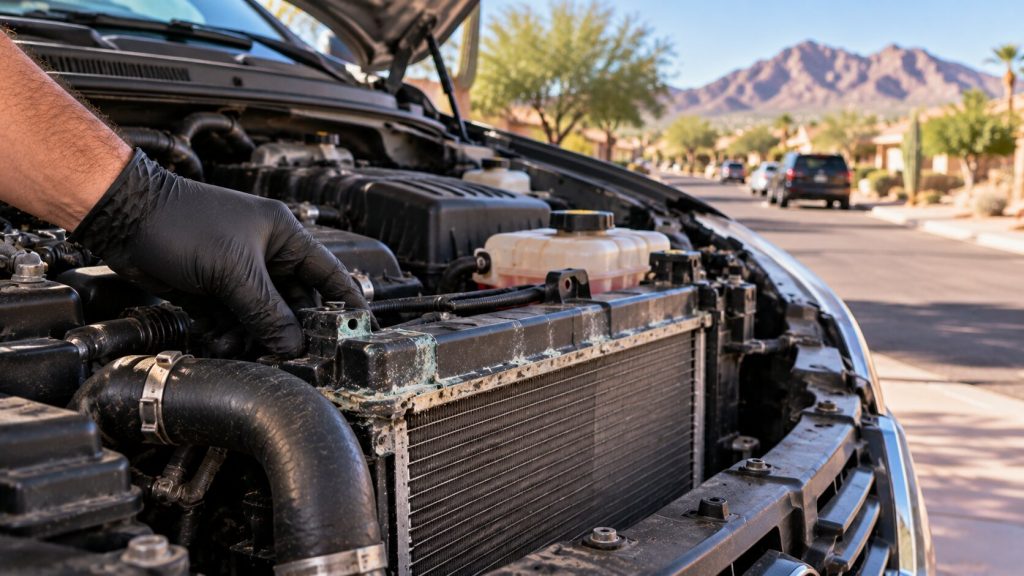
Daily drop-offs, quick errands, and constant idling along school routes in Sam Hughes and Menlo Park strain family SUV cooling systems far more than highway driving. Short neighborhood trips repeatedly cycle your engine between cold starts and peak operating temperatures, causing plastic radiator tanks to expand, contract, and crack under heat stress.
The Mechanical Physics Behind Tucson Radiator Failure
Modern SUV radiators combine lightweight aluminum core fins with crimped plastic end tanks made of glass-filled PA66 nylon resin. Under normal highway driving, constant 50 mph airflow keeps coolant temperatures stabilized around 190°F–205°F while pressure remains steadily regulated by the radiator cap.
When running frequent 3-mile neighborhood trips near Menlo Park, your engine repeatedly cycles between cold starts and high operating heat before reaching stable thermal equilibrium. This rapid heating and cooling causes asymmetric expansion between the aluminum core header and the PA66 plastic end tanks, as the metal expands and contracts at twice the rate of the plastic.
How Tucson Heat-Soaking Destroys End Tank Seals
During hot afternoon drives across town, stopping in school pickup lines stops all ram-air cooling through the front grille. Heat-soaking occurs immediately after engine shutoff, causing localized pressure surges up to 18 PSI against the upper hose neck.
Radiant heat bouncing off 145°F Tucson asphalt elevates lower engine bay temperatures far beyond normal operating thresholds. Over time, the internal rubber O-ring seal between the plastic tank and aluminum header hardens, micro-fractures form along the crimp tabs, and pressurized coolant sprays out as atomized mist before it can pool on the ground.
Early Physical Indicators of Radiator Seam Weepage
Catching cooling issues early prevents minor leaks from turning into catastrophic engine failures during peak summer heat. Small radiator cracks often seal themselves shut when the engine cools down, making visual detection tricky without knowing where to look.
- Syrup-Like Scent: A distinct, sweet ethylene glycol odor around the front grille right after parking in your driveway.
- Seam Crust: White or chalky color-tinted crusty buildup along the upper PA66 plastic end tank crimp tabs.
- Idle Needle Creep: A dashboard temperature gauge that creeps past the midpoint during school pickup lines, then drops back to normal once moving.
- Hose Softness: Upper radiator hoses that feel spongy or show outer micro-cracks near the thermostat housing connection.
Proactive Diagnostic Workflow at Campbell Avenue
I don’t rely on visual inspection alone, as small radiator cracks seal shut under ambient shop temperatures. I use a systematic pressure and thermal testing protocol to catch micro-leaks before total cooling loss occurs.
- Cold System Pressure Test: I connect a Stant pressure tester to the radiator expansion tank neck with the engine completely off. I pump the system to 18 PSI (holding 2 PSI above factory cap rating) and monitor the gauge for 15 minutes to spot hairline PA66 tank seam weepage.
- Infrared Thermal Imaging: Using a FLIR thermal camera across the aluminum core at idle, I look for temperature deltas greater than 20°F between internal coolant passages. A sudden cool spot indicates internal tube restriction from desert dust buildup or degraded silicate fallout.
- Coolant Refractometer Analysis: I test chemical integrity using a clinical refractometer to measure freeze/boiling protection levels and use digital pH test strips to verify glycol oxidation (anything below 7.5 pH indicates active acid corrosion inside the engine block).
Expert Radiator Care and Maintenance in Tucson
Ignoring minor radiator seam weepage quickly leads to thermal warping of cylinder heads, blown head gasketsa, and total engine failure under summer heat. Instead of waiting for an overheating light on I-10, bring your vehicle to Accurate Service Auto Repair. I perform comprehensive 18 PSI pressure tests, chemical fluid analysis, and thermal scans tailored specifically to Tucson’s extreme driving demands. Visit us at 843 S Campbell Ave, Tucson, AZ 85719 for your family SUV cooling system inspection.
Frequently Asked Questions
How often should I check my radiator coolant level?
Check your vehicle’s coolant expansion tank at least once a month when the engine is completely cold. Inspecting fluid levels before long family trips or seasonal weather shifts helps you spot gradual leaks early.
Can short neighborhood drives really damage my SUV radiator?
Yes. Frequent short trips cause rapid thermal cycling where aluminum core headers and PA66 plastic end tanks expand at different rates. This constant stress degrades internal rubber seals and shears plastic end tank crimps faster than continuous highway driving.
What color should clean radiator coolant look like?
Clean coolant is brightly colored green, orange, pink, or blue depending on your vehicle manufacturer specification. If the fluid appears murky brown, cloudy, or contains floating rust particles, it has oxidized and must be flushed immediately.
Why does my engine run hotter when idling in school lines?
Engines run hotter at idle because natural frontal airflow across the radiator drops to zero, forcing the electric fan clutch to pull air through the system alone. Ambient road temperatures rising off Tucson asphalt easily exceed 145°F, overwhelming clogged radiator fins during prolonged idling.
