

Unchecked coolant leaks cause rapid pressure loss, boiling, and trapped heat pockets inside engine blocks. In Tucson’s extreme climate, minor hose or radiator drips quickly escalate into blown head gaskets, warped cylinder heads, and catastrophic engine damage. Early pressure testing catches tiny leaks before they turn into multi-thousand-dollar repair bills.
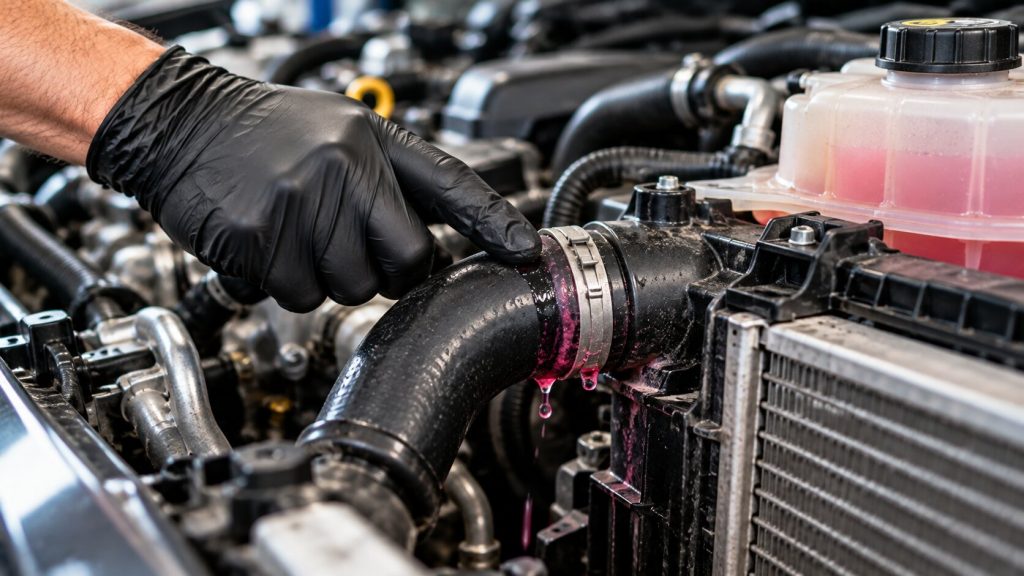
Ignoring a tiny puddle of sweet-smelling fluid under your car is a high-stakes gamble. In our Sonoran Desert climate, a minor cooling system leak quickly escalates from a quick hose replacement into warped engine parts, blown head gaskets, and total radiator failure.
The Reality of Driving with a Coolant Leak in Southern Arizona
Coolant does far more than keep your engine from freezing during rare winter nights. It absorbs intense engine heat and carries it away through the radiator while you sit in heavy stop-and-go traffic on Broadway Boulevard.
When coolant leaks out, the system loses the pressure needed to keep the remaining fluid from boiling. Lower pressure means the fluid boils much sooner, creating trapped vapor pockets that bake sensitive aluminum engine parts at extreme temperatures. Maintaining proper levels through regular automotive fluid services is key to preventing this thermal damage.
How Sonoran Desert Heat Accelerates Cooling System Damage
Tucson’s summer temperatures create brutal conditions for plastic and rubber cooling parts. Engine bay temperatures regularly climb past 200 degrees Fahrenheit, causing materials to expand and shrink until they break down.
- Cracked Radiator End Tanks: The plastic tanks attached to aluminum radiators become brittle over time and develop hairline cracks under normal operating pressure.
- Soft, Swollen Rubber Hoses: Intense heat weakens rubber hoses from the inside out, causing them to bulge and leak at connection points.
- Stuck Thermostats: Thermal stress causes the internal springs in your thermostat to jam, blocking coolant flow and causing instant overheating.
- Acidic Fluid Damage: Old coolant turns acidic over time, slowly eating away at internal radiator tubes and heating components.
The Chain Reaction of Delayed Leak Repairs
A minor leak in a small bypass hose rarely stays minor for long. As coolant levels drop below the temperature sensor, your dashboard gauge may actually read “normal” even while the engine is actively baking itself.
Without enough liquid, extreme heat builds up rapidly across the top of the engine. The engine block and cylinder head expand at different rates, crushing the head gasket seal between them and allowing hot combustion gases to destroy your entire cooling system.
Proactive Diagnostics to Catch Hidden Leaks Early
Catching a leak before it strands you on the highway requires real shop testing rather than relying on a quick visual check under your car. I use professional testing methods to pinpoint weak spots before they cause catastrophic breakdowns:
- System Pressure Testing: I connect a specialized pressure tester to the cold cooling system at 16–18 PSI to force fluid through tiny hairline cracks without running the engine.
- UV Dye Tracing: Adding a harmless UV-reactive dye into the reservoir lets me track hidden leaks behind engine covers using a blacklight.
- Chemical Leak Testing: Testing fluid samples for chemical combustion traces confirms if a tiny leak has already damaged your head gasket.
A customer brought in a 2018 F-150 with no visible driveway drip. A quick 15-minute pressure test at 18 PSI pinpointed a hidden hair-fracture along the plastic radiator end-tank seam. This specific leak stayed invisible until under-hood temperatures crossed 205°F and forced the crack open.
Common Signs That Signal an Immediate Cooling System Threat
Paying attention to how your car behaves helps you fix minor drips before they ruin expensive engine components. Watch for these physical warning signs long before an overheating light pops up on your dashboard:
- A Sweet Smell: A distinct, sugary odor coming from under the hood or through your dashboard vents after parking.
- Steam or White Vapor: Steam coming from behind the front grille or thick white smoke puffing out of the exhaust pipe.
- Wet Passenger Carpets: Damp carpet on the passenger side inside the cabin, which means your internal heater core is leaking.
- Colorful Puddles: Bright green, pink, orange, or yellow liquid pooling under the front bumper.
Stop Coolant Leaks Before They Stop Your Engine
Allowing a simple fluid drip to turn into an engine-destroying heat wave is an unnecessary financial risk. My team and I at Accurate Service Auto Repair provide complete cooling system checks, pressure tests, and precision repairs designed to handle Tucson’s harsh heat. Visit my shop at 843 S Campbell Ave, Tucson, AZ 85719, or call us today to schedule your checkup before a small leak becomes a major bill.
Frequently Asked Questions
Can I drive my car short distances if I keep topping off the coolant?
No. Driving with an active leak prevents the system from holding pressure, which causes fluid to boil and form hot air pockets instantly. These air pockets warp expensive engine parts while your dashboard temperature gauge still reads normal.
Why is my car losing coolant if there are no puddles underneath it?
Coolant is usually burning internally through a damaged head gasket or evaporating instantly off hot engine metal without leaving a drip on the ground. In both cases, the fluid is escaping under heat and pressure without leaving a driveway puddle.
How do I know if my coolant leak is coming from the radiator or a hose?
Radiator leaks typically leave crusty residue or fluid stains around the plastic side tanks and metal fins, while hose leaks show damp swelling, soft spots, or spray patterns near connection clamps. A quick shop pressure test pinpointing the exact failure point is the fastest way to tell them apart.
How often should I replace the coolant in my vehicle?
Replace your coolant every 30,000 to 50,000 miles or every 3 to 5 years, depending on your manufacturer guidelines. Over time, protective anti-corrosion additives wear out, turning the liquid acidic and damaging internal radiator passages and pump seals.
