

Modern vehicle cooling systems rely on electronic controls and multi-stage thermostats, making accurate diagnostics vital before replacing a radiator. Intense Sonoran Desert heat triggers failures across sensors, fan modules, and water pumps that mimic radiator clogs. Professional pressure and thermal testing isolate the true underlying fault, preventing unnecessary replacements and costly engine damage.
When an engine starts running hot in desert weather, jumping straight to a radiator replacement often misses the true fault and wastes money on a functional part. Modern cooling systems rely on complex electronics alongside traditional plumbing, meaning a high temperature gauge is just as likely caused by a failing sensor, an electronic control valve, or a weak electric fan. A proper diagnostic check pinpoints the exact failure point before any major components are unbolted.
Desert Heat Accelerates Modern Cooling System Failures
Tucson summer weather pushes engine cooling systems to their absolute limits, especially in heavy stop-and-go traffic along Broadway Boulevard or out on I-10. Newer cars manage these extreme conditions using variable-speed electric fans and computer-controlled thermostats. When outside temperatures pass 100°F, even a tiny drop in fluid pressure below 15 PSI or a slightly faulty temperature sensor reading can cause the engine to overheat quickly.
Extreme heat causes the plastic ends on modern metal radiators to expand and contract over and over, eventually creating tiny hairline cracks along the seams. However, that same intense heat also damages fan relays, warps plastic thermostat housings, and causes fluid clogs that look identical to a broken radiator. Changing parts without testing these electrical and mechanical connections first leads to repeated breakdowns because the original issue was never fixed.
How Electronic Controls Change Engine Cooling Dynamics
Older cars used simple mechanical thermostats that opened purely based on coolant temperature. Modern engines use electronically controlled thermostats that open and close based on how hard you are driving, your vehicle speed, and whether the air conditioner is running. This setup helps the engine run warmer during easy highway cruising for better gas mileage, and cooler during hard acceleration to protect engine parts.
When an electronic thermostat or fan controller begins to fail, it cannot switch between these cooling modes properly. The car’s computer notices that engine temperatures do not match what it expects, so it triggers a warning light or lets the engine overheat. If a mechanic only checks the radiator, they will completely miss that the computer is unable to tell the electric cooling fan to turn on at high speed.
Physical Failures That Resemble Radiator Clogs
Galvanic corrosion happens when old coolant loses its protective chemical mix and starts carrying small electrical currents through the engine. This reaction creates metallic debris and gel-like buildup that settles inside the tiny tubes of the heater core and radiator. This restriction blocks coolant from flowing freely, trapping heat inside the engine block even while the radiator itself feels cool to the touch.
Cavitation is another mechanical problem where low fluid pressure forms tiny bubbles near the water pump blade. When these bubbles collapse violently under pressure, they chip away at the metal pump housing and blades over time. The engine overheats because coolant moves too slowly to carry heat away, making the radiator look like the culprit when the worn water pump is actually at fault.
Step-by-step System Troubleshooting Protocol
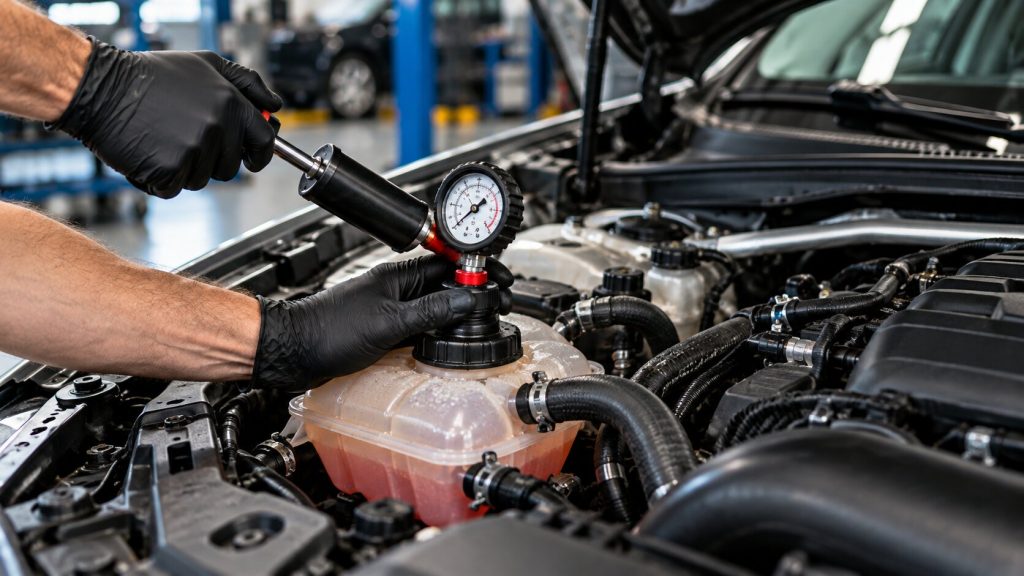
Finding the real problem starts with a careful visual check, followed by controlled pressure testing to make sure fluid stays sealed inside the system. I connect a pressure tester to a cold engine and pump 16–18 PSI into the system to spot small leaks along hose ends, heater fittings, and plastic radiator seams safely.
- Static Pressure Test: Pressurizing the system cold at 16–18 PSI for 15 minutes isolates small seam cracks and fitting leaks safely.
- Thermal Imaging Scan: Warm the engine up to 195–215°F and scan the radiator with an infrared camera to locate cold spots where fluid is blocked from flowing.
- Electronic Control Verification: Use a diagnostic scan tool to test the electric fan from 0 to 100 percent speed and verify the electronic thermostat responds to computer signals.
- Combustion Gas Detection: Test the air inside the coolant bottle for exhaust gases to rule out a blown head gasket before replacing expensive parts.
Using a thermal imaging camera lets me see the heat patterns across the radiator core as the car warms up. A healthy radiator shows a smooth, even change in temperature from top to bottom. Hot spots right next to cold areas clearly show an internal blockage, proving whether the radiator needs replacing or if an electronic control valve upstream is causing the bottleneck.
Recently, a customer brought in a car after paying for a new radiator elsewhere that failed to fix an overheat issue on I-10; a 5-minute test with my scan tool showed the fan controller was dropping power at high speeds while the original radiator was completely fine.
Why Complete Testing Protects Your Engine
Replacing a radiator based only on a high temperature gauge is a costly gamble that often leaves the real problem behind. Driving an overheating vehicle can quickly cause severe engine damage, like warped metal parts or blown head gaskets. A thorough test pinpoints the exact part that failed, saving you time and preventing unexpected breakdowns on Tucson roads.
Schedule Your Cooling System Check
Don’t let a minor cooling issue turn into a major breakdown on the highway. If your temperature gauge is rising, your heater isn’t working properly, or you suspect a fluid leak, getting an accurate diagnosis today will save you from major repair bills later.
Call me directly or visit my shop at 843 S Campbell Ave, Tucson, AZ 85719 to have your car evaluated by a technician who pinpoints the root cause. You can also head over to Accurate Service Auto Repair to schedule your diagnostic appointment and keep your car running reliably in the desert heat.
Frequently Asked Questions
Can a faulty thermostat cause symptoms similar to a bad radiator?
Yes, a thermostat that gets stuck closed blocks hot coolant from reaching the radiator, causing the engine to overheat quickly while the radiator stays cool. A thermostat that sticks partially open will cause your engine temperature to jump up and down while driving in town.
How do I know if my overheating issue is electrical or mechanical?
Electrical issues usually cause temperature spikes when you are sitting at red lights or idling with the A/C on because the cooling fan fails to spin up. Mechanical issues like internal clogs or a worn water pump cause overheating that gets worse as you drive faster or push the engine harder.
Is it safe to drive my car short distances if it starts overheating?
No, modern aluminum engines can suffer permanent cylinder head damage or blown gaskets within just a few minutes of severe overheating. It is always safest to turn off the engine immediately, pull over to a safe spot, and call for a tow truck.
Why does my car overheat only during Tucson summer months?
Extreme desert heat leaves very little margin for error in your car’s cooling system. Minor issues like a slightly weak fan or minor internal buildup that go unnoticed in cooler winter months get pushed past their limit during summer heatwaves.
