

In Sonoran Desert climates, degraded water pump impellers reduce coolant flow below 15 GPM, causing localized cylinder head boiling and pressure spikes over 22 PSI. Expanding steam surges into the radiator, cracking plastic end tanks and splitting crimped aluminum seams. Replacing both interconnected cooling components concurrently prevents repeat pressure-induced failures.
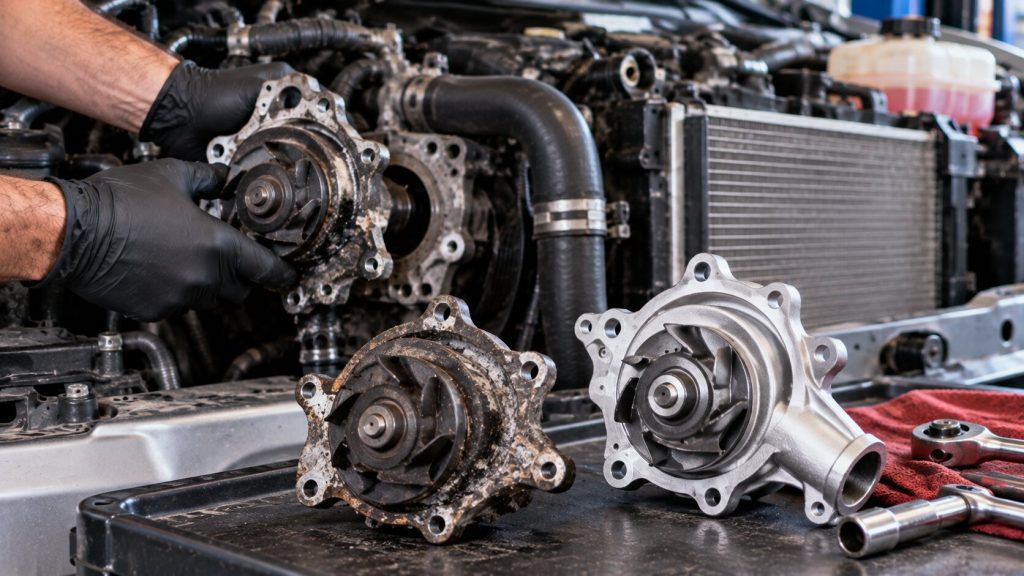
In extreme Sonoran Desert climates, I consistently see mechanical water pump impeller degradation drop coolant flow rates below 15 GPM, triggering localized block boiling and sudden system pressure spikes over 22 PSI. This severe thermal shock forces expanding steam directly into the radiator, cracking plastic end tanks and splitting crimped aluminum seams along heavy heat-soak corridors like Campbell Avenue. Evaluating and replacing both interconnected cooling components simultaneously is my standard approach to prevent immediate pressure-induced leaks and protect engine blocks against permanent warp damage.
The Fluid Dynamics of Water Pump Cavitation and Radiator Shear
I rely on steady hydraulic pressure to keep 50/50 ethylene glycol under control at operating temperatures reaching 195°F to 215°F. The water pump’s impeller drives fluid through the engine jackets at high velocity.
When plastic impellers suffer micro-cracking or metal vanes succumb to fluid cavitation, a process where low-pressure vapor bubbles collapse with violent micro-jets of force, I measure a sharp drop in coolant velocity. Deprived of flow, fluid stagnant inside the cylinder head heat-soaks past its boiling threshold.
This localized phase change converts liquid coolant into expanding steam, surging system pressure from a standard 14–16 PSI past the relief point of a 20 PSI radiator cap. Modern radiators feature PA66 glass-filled nylon end tanks crimped with rubber gaskets onto an aluminum core matrix.
Under localized boiling spikes, high-temperature steam hits these composite tanks. The sudden delta T (thermal expansion mismatch) between the aluminum core and the plastic tanks, paired with internal pressure ripples, causes the crimp tabs to yield or the plastic upper neck to fracture.
Diagnostic Workflow for Pinpointing Dual Failure Points
I always isolate primary component decay from secondary pressure damage before performing teardown:
- System Static Pressure Lockdown Test: I connect a cooling system pressure tester to the expansion neck and pump the system to 18 PSI (without exceeding the cap rating). I monitor the pressure decay gauge over 15 minutes. A drop greater than 1 PSI without visible external drips signals internal micro-fissures or head gasket bypass to me.
- Dynamic Pressure Transducer Waveform Analysis: I install a PicoScope pressure transducer in line with the upper radiator hose and run the engine from cold idle up to 3,000 RPM. Smooth pressure increases match pump speed. Sudden erratic pressure spikes tell me localized boiling is occurring due to low impeller flow.
- Shaft Play & Mechanical Audit: I disconnect drive belts and inspect the water pump pulley hub for radial play using a dial indicator. Radial play exceeding 0.05 mm confirms bearing wear and an impending shaft seal failure.
- Radiator Core Flow & Debris Check: I flush out old, degraded coolant and measure the fluid discharge rate across the lower outlet. I know that partial internal clogging combined with new pump pressure will immediately rupture aging radiator seams.
Deciding Between an Isolated Repair and Full System Replacement
I consider installing a new high-flow water pump onto an original radiator with 80,000+ miles of Tucson heat exposure a high-risk gamble. The renewed hydraulic output of a fresh pump instantly exposes hidden structural weaknesses in brittle plastic tanks. I have seen fresh pressure easily rupture weakened seam crimps within days of service. Replacing the water pump, radiator, thermostat, and main coolant hoses in a single service cycle allows me to establish uniform mechanical integrity across the entire heat-exchange loop.
Prevent Overheating Damage on Sonoran Drives
Waiting for an active leak to replace heat-stressed cooling parts usually leads to severe engine block warping. A complete cooling system audit catches impeller flow drops and radiator end-tank hairline fractures before hot summer commutes turn into catastrophic breakdowns. Addressing the water pump, radiator, and hoses together locks in hydraulic balance and long-term peace of mind on desert highways.
Protect your engine from severe thermal failure before ambient temperatures spike by bringing your vehicle to me at Accurate Service Auto Repair located at 843 S Campbell Ave, Tucson, AZ 85719 for a comprehensive cooling system pressure test and flow audit.
Frequently Asked Questions
Can a bad water pump cause a radiator to leak?
Yes. A failing water pump restricts coolant flow, causing localized engine overheating and steam generation. This rapid expansion spikes system pressure beyond 20 PSI, which cracks brittle plastic radiator tanks and forces crimped aluminum seams apart.
Should I replace my radiator and water pump at the same time?
Yes. Installing a high-output new water pump restores full fluid pressure, which quickly ruptures weakened end-tanks or aged crimps on an original radiator. Dual replacement ensures consistent system strength and prevents repeat teardown labor costs.
How long does a typical water pump last in desert climates?
Most water pumps last 60,000 to 90,000 miles in desert regions. Extreme Sonoran ambient heat accelerates bearing grease breakdown, stresses mechanical shaft seals, and degrades plastic impellers faster than in moderate climates.
What happens if I drive with a small water pump leak?
Driving with a small leak depressurizes the sealed system, lowering the coolant’s boiling point and introducing air pockets. Air bubbles trigger localized hot spots in the cylinder head, leading to warped metal, blown head gaskets, and sudden radiator failure.
