

Commercial diesel radiators in Tucson face extreme thermal stress when ambient temperatures exceed 105°F during heavy towing and stop-and-go driving. High heat and heavy payloads degrade plastic end tanks and aluminum cores, leading to pressure drops. Catching early warning signs like coolant leaks or temperature spikes prevents severe engine damage.
Running commercial work trucks in Tucson means putting your cooling system through a relentless test every single summer. When you’re pulling heavy trailers up Mount Lemmon or idling on hot asphalt along I-10, your engine heat spikes fast. I see firsthand how fast desert heat breaks down radiators, and catching those early warning signs is the difference between a quick shop visit and a multi-thousand-dollar engine rebuild.
Why Desert Heat and Heavy Loads Overwhelm Diesel Radiators
Tucson summers create a tough environment for heavy-duty cooling systems. When outside temperatures climb past 105°F, your radiator works twice as hard to shed heat from your engine. Continuous radiant heat coming off hot asphalt means the air entering your front grille is often far hotter than the ambient air around you.
Heavy payloads and steep mountain grades put extra stress on your cooling setup. Towing heavy trailers up Mount Lemmon or along I-10 causes diesel engines to produce massive amounts of internal combustion heat. When radiator fins are bent or clogged with desert dust, cooling efficiency drops quickly and forces your cooling fan to run continuously.
Over time, repeated heating and cooling cycles cause normal physical wear across the entire cooling unit. The aluminum core tubes expand while the plastic side tanks expand at different rates. I see how this continuous stress leads to small pinhole leaks, hairline cracks, or leaks along crimped tank seams.
Common Signs Your Diesel Truck Needs Radiator Service
Spotting cooling issues early protects critical engine components from severe heat damage. Because diesel cooling systems hold a large volume of fluid, minor leaks can go unnoticed until temperatures spike during heavy hauling.
I frequently point out these clear warning signs to work truck owners when they drop off their vehicles:
- Steam under the hood: Sweet-smelling vapor appearing after pulling heavy loads or climbing steep grades.
- Coolant puddles: Green, orange, or red fluid pooling under your front bumper when parked overnight.
- Powdered residue: Crusted white or colored deposits forming along plastic tank edges or lower hose connections.
- Temperature spikes: Your gauge rising quickly while idling at job sites or waiting in traffic along Campbell Avenue.
- Discolored fluid: Thick or murky fluid inside your expansion tank, which can point to fluid breakdown or oil cooler contamination.
If you spot any of these indicators while towing or carrying heavy payloads, bring your truck in for an inspection promptly to avoid major breakdown delays.
How Desert Conditions Wear Down Radiator Cores
Modern diesel trucks typically use aluminum radiator cores attached to composite plastic side tanks. While this design saves weight and transfers heat efficiently, desert driving creates specific wear patterns that I look for during routine service:
- Heat hardens plastic components: Frequent shifts between fast highway driving and idling in traffic cause rapid temperature changes. Over years of exposure to hot coolant, plastic end tanks harden and turn brittle, making them more likely to crack under normal operating pressure.
- Desert dust and debris block airflow: Fine desert dust, sand, and road debris constantly strike thin core fins during daily operation. This buildup bends fins and restricts fresh airflow, while accumulated dirt holds moisture against lower metal channels and encourages gradual surface corrosion.
Diagnostic Steps to Pinpoint Cooling Leaks
Keeping your work truck reliable requires accurate testing—never guessing. My diagnostic process pinpointing exact failure points ensures you only repair or replace parts that are genuinely worn out or damaged:
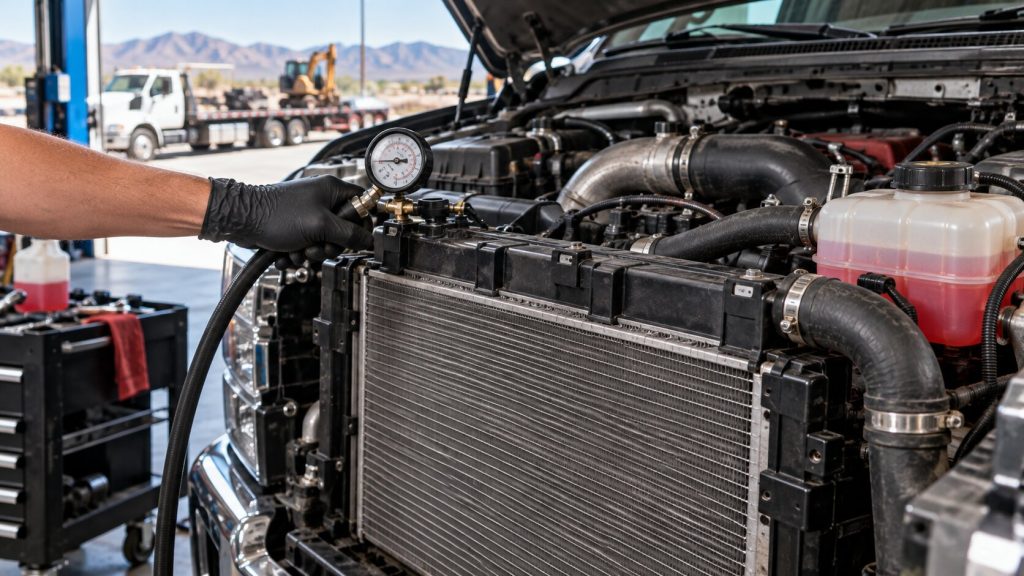
- Pressure Testing: Pressurizing the cooling loop reveals whether pinhole leaks, cracked plastic side tanks, or loose hose fittings are dropping system pressure.
- Combustion Leak Checks: Sampling air inside the expansion tank verifies if combustion gases are leaking past engine seals into your coolant loop.
- Thermal Scans: Scanning the radiator core with a thermal camera pinpoints hidden cold spots caused by internal clogs or restricted fluid paths.
- Fluid Inspection: Checking coolant pH levels and fluid condition confirms whether breakdown or acid buildup is accelerating internal core wear.
How I Help You Choose Between OEM and Heavy-Duty Radiators
Choosing the right replacement radiator depends on your daily routes, haul weights, and fleet expectations. I evaluate your daily usage to help you pick the right match:
- Direct-Fit OEM Radiators: These match original factory specifications for fit and cooling capacity. I recommend these for standard commercial trucks that stick to routine maintenance schedules and carry moderate loads.
- All-Aluminum Radiators: These replace composite plastic side tanks with fully welded aluminum end tanks. I suggest these for drivers who need higher durability against pressure spikes, rough job sites, and extreme desert heat.
- High-Capacity Multi-Row Radiators: These units feature extra cooling rows and a denser fin design to boost overall cooling capacity. I install these on vehicles dedicated to heavy daily towing and extreme operating environments.
Schedule Your Diesel Radiator Inspection in Tucson
Preventing sudden roadside breakdowns begins with proactive maintenance before peak summer temperatures arrive. Let me inspect your cooling system early to keep your work trucks reliable and working hard.
To schedule a diagnostic check or discuss cooling system repairs for your commercial vehicle, contact me at Accurate Service Auto Repair by calling (520) 622-7685 or stopping by 843 S Campbell Ave, Tucson, AZ 85719.
Frequently Asked Questions
Can I drive my diesel truck with a small radiator leak?
No. Driving a commercial diesel truck with even a small radiator leak reduces system pressure and lowers the boiling point of your coolant. Under heavy payloads or hot weather, this can cause rapid engine overheating and severe damage within a short distance.
How long does a diesel radiator replacement take?
A standard diesel radiator replacement generally takes 4 to 6 hours. In my shop, I structure this timeframe to allow proper removal of surrounding components, core installation, fresh coolant filling, and complete pressure testing.
Why do plastic radiator tanks crack so often in Tucson?
Extremely high desert air temperatures and engine heat cause composite plastic tanks to lose flexibility and turn brittle over time. Regular expansion and contraction cycles eventually cause cracks along stress points or crimped seams.
Should I replace my thermostat when installing a new radiator?
Yes. I always recommend replacing your thermostat during a radiator installation as a wise preventative step. A sticking thermostat can restrict coolant circulation, causing your new radiator to overheat unnecessarily.
