

Tucson’s intense summer heat degrades commercial truck radiators, weakening end tanks and core joints. Timely detection of coolant seeps, pressure loss, and core blockages through professional diagnostics prevents severe engine warping, blown head gaskets, and costly fleet downtime. Routine cooling system maintenance ensures reliable vehicle operation across Southern Arizona freight corridors.
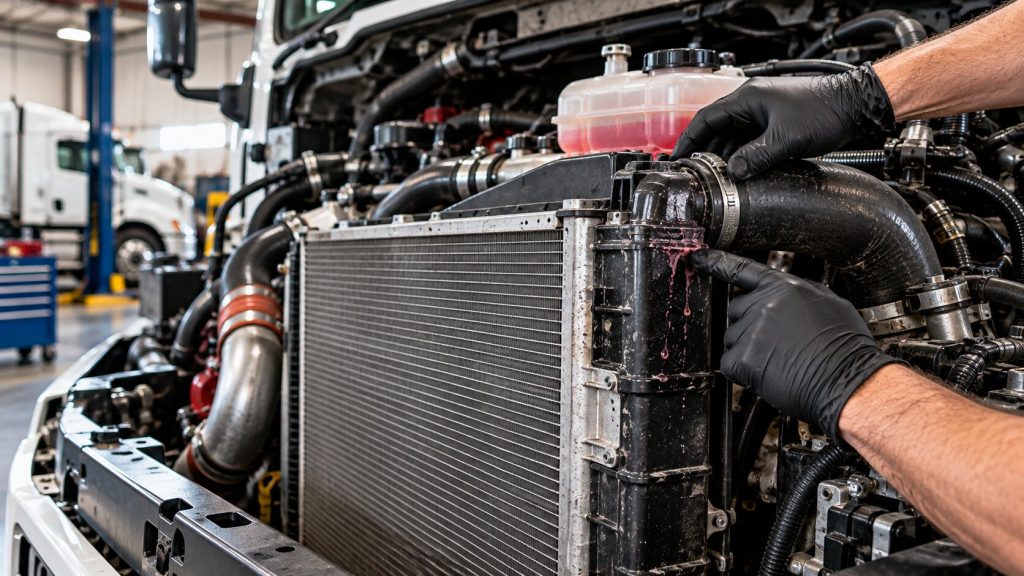
Sustained triple-digit summer heat along Tucson freight corridors like Interstate 10 causes severe heat-soaking in commercial delivery trucks, frequently degrading plastic radiator end tanks and baking aluminum core joints until they split. When a heavy-duty cooling system gives out mid-route near the Port of Tucson or along the South Campbell Avenue industrial hub, engine temperatures spike instantly, risking severe engine damage. Managing local commercial truck service requires catching radiator fatigue before thermal stress converts a minor coolant seep into a major engine overhaul.
How High Heat Degrades Tucson Heavy Duty Radiators
Think of a commercial radiator as a heavy-duty heat exchanger designed to pull thermal energy out of engine oil and internal engine components. Hot coolant flows through thin aluminum channels while outside air dissipates heat through external cooling fins. Under normal operating conditions, this continuous heat transfer keeps fleet engines running within safe temperature margins.
During a Southern Arizona summer, ambient air temperatures regularly climb past 100°F, while radiant heat bouncing off asphalt roads easily surpasses 140°F. This intense thermal environment forces internal cooling system pressures to their upper design limits. Extreme heat accelerates chemical breakdown in older antifreeze solutions, stripping away corrosion inhibitors and causing scale buildup inside narrow core passages.
When internal passages clog, localized hot spots develop inside the engine block. These hot spots create massive pressure surges against the composite end tanks and aluminum crimp seams. Expanding and contracting under continuous thermal cycles weakens these structural seals, eventually causing hairline cracks, seam separation, and fluid leaks.
Identifying Signs of Impending Cooling System Failure
Catching cooling system fatigue early prevents costly roadside breakdowns and keeps your delivery schedules on track throughout Southern Arizona. Drivers and fleet managers can monitor several clear indicators during daily pre-trip vehicle checks:
- Visible Coolant Loss: Bright green, red, or orange fluid pooling under the front axle area indicates active seam or tank leakage.
- Temperature Gauge Spikes: Engine gauges swinging rapidly toward the hot threshold during hill climbs or extended idling suggest restricted coolant circulation.
- Crusted Fluid Residue: White or colored powdery deposits near hose connections and end-tank crimps signal dried coolant from slow vapor leaks.
- Sweet Odor Near the Grille: A distinct chemical smell coming from the front bumper area after running a route indicates escaping pressurized vapor.
Systematic Diagnostic Methods for Fleet Radiator Repairs
Finding a microscopic seam crack or blocked cooling tube requires precise testing equipment before removing components. We follow a systematic diagnostic sequence to isolate the exact point of failure:
- System Pressure Testing: We attach a specialized pressure tester directly to the neck of the surge tank, bringing the system up to 15–20 PSI. If the pressure needle drops or fluid seeps around the end tank, it confirms a physical leak in the joint seals.
- Refractometer Fluid Analysis: We test fluid quality using a digital refractometer. This instrument measures the exact boiling point and freeze protection threshold of your antifreeze to verify chemical breakdown.
- Combustion Gas Check: A chemical fluid detector checks the airspace inside the expansion tank. Detecting combustion gases inside the cooling channels points to a failing head gasket rather than an isolated radiator defect.
- Infrared Thermal Scan: We scan the entire radiator core surface with an infrared thermal camera while the engine runs at operating temperature. A temperature difference exceeding 15°F across adjacent core sections reveals blocked internal tubes where scale stops coolant flow.
Protecting Your Fleet Against Secondary Engine Damage
Ignoring a leaking or clogged commercial radiator triggers a destructive chain reaction throughout the entire powertrain. When coolant volume drops below operational thresholds, engine oil overheats rapidly, losing its slippery viscosity and stripping critical lubrication away from crankshaft bearings, pistons, and cylinder walls.
Sustained overheating causes cylinder heads to warp and engine blocks to crack, converting a manageable cooling repair into a complete engine replacement. Furthermore, extreme temperature spikes ruin expensive turbocharger bearings and degrade delicate exhaust treatment systems. Proactive cooling maintenance stops these compounding mechanical failures before they cause extended vehicle downtime.
Stop Fleet Downtime Before It Starts
Unplanned cooling failures directly compromise delivery schedules, business revenue, and long-term vehicle usability. Dealership service centers often carry long service backlogs, leaving vital work vehicles sitting idle for weeks over routine repairs. We focus on quick, accurate diagnostics and dependable turnarounds tailored directly to local commercial operations.
If your commercial trucks show signs of thermal stress or active coolant leaks, visit Accurate Service Auto Repair at 843 S Campbell Ave, Tucson, AZ 85719 or call our shop today to schedule a complete cooling system evaluation for your fleet.
Frequently Asked Questions
What causes commercial truck radiators to leak near the end tanks?
Thermal expansion is the primary cause. Extreme hot-and-cold driving cycles break down the rubber gasket material sandwiched between the aluminum core and plastic end tanks, allowing high pressure to force coolant past the weakened crimp seams.
How often should coolant be tested in commercial fleet vehicles?
At every oil service interval or every 10,000 miles. Regular testing ensures that chemical corrosion inhibitors remain active and protects internal radiator tubes from scale buildup.
Can a clogged radiator cause automatic transmission overheating?
Yes. Many commercial trucks route transmission fluid through an integrated cooler built into the radiator’s side tank, so a clogged radiator core directly drives up transmission fluid temperatures.
Is it better to repair or replace a leaking commercial truck radiator?
Replacement is the most reliable solution. Attempting to patch cracked plastic end tanks or corroded core channels usually leads to repeat seam failures under heavy commercial workloads.
