

Coolant temperature sensors continuously send vital voltage data to control electric cooling fans and regulate heat dissipation. Diagnostic testing using multimeters and thermal imaging identifies sensor drift and electrical short circuits early. Verifying electronic sensor accuracy alongside physical radiator checks prevents fan failure, localized heat buildup, and severe engine block warping.
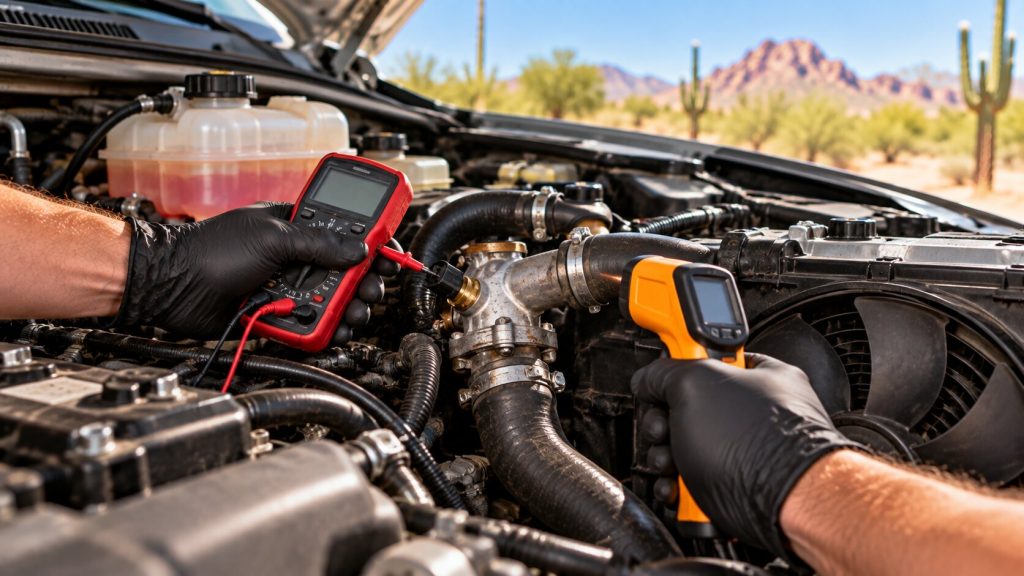
When a coolant temperature sensor fails, it misreports thermal data to your vehicle’s computer, preventing electric cooling fans from triggering during peak heat. Diagnostic testing using multimeters and thermal imaging identifies signal drift before overpressurization causes cracked radiator end tanks, localized hot spots, and irreversible engine block warping.
Why Modern Radiators Depend on Sensor Accuracy
Modern cooling systems no longer rely on simple mechanical thermostats alone. Today, your engine computer depends on continuous electrical signals from the coolant temperature sensor to turn on variable-speed electric fans, adjust grille shutters, and regulate coolant flow.
If the sensor drifts out of calibration by even 10 or 15 degrees, the radiator cannot do its job because supporting airflow never turns on. For instance, a sensor reading 185°F when actual coolant temperatures reach 210°F keeps electric fans idling while fluid boils inside the radiator tubes.
Common Signs Your Coolant Temperature Sensor Is Failing
When drivers experience cooling trouble, they often assume the radiator is clogged or leaking. More often than not, the real culprit is an electronic reporting error:
- Erratic Gauge Needle: The dashboard needle bounces unexpectedly, spikes during idle, or stays stuck on “cold” after driving down I-10.
- Overheating at Stoplights: Engine temperatures climb while idling in Tucson traffic, but drop back to normal once you get up to highway speeds.
- Sudden Drop in Fuel Economy: A sensor stuck reading cold causes the computer to continuously dump excess fuel into the cylinders, causing rough idling and poor gas mileage.
- Fans Running Long After Shutdown: Electric cooling fans run at maximum speed after turning off the ignition, draining your battery.
- Check Engine Light: Diagnostic trouble codes P0115 through P0119 appear, flagging circuit errors during a check engine light diagnosis.
How To Test Coolant Temp Sensors
Last month, a 2018 truck came in pushing 230°F on Campbell Ave during midday heat. The radiator was in perfect shape, but the sensor was stuck sending 1.2k (reporting ~140°F to the computer). The computer never grounded the fan relay, keeping the cooling fan off while the engine boiled. I go beyond reading basic trouble codes:
- Resistance Checks: A healthy sensor’s internal electrical resistance should drop smoothly as coolant warms up, typically starting around 2,500 at 68°F and dropping down to roughly 180 at operating temp (212°F). Any sudden signal spikes or static resistance mean the sensor tip is degraded, requiring electrical troubleshooting.
- Thermal Verification: I point an infrared thermometer or thermal imaging camera directly at the radiator intake hose to compare actual surface temperature against live computer data. If physical fluid temp reads 200°F but the computer sees 170°F, I know the sensor has drifted out of spec.
The Role of Sensor Diagnostics in Preventing Radiator Damage
When a faulty sensor fails to trigger cooling fans, internal pressure inside the radiator builds rapidly as fluid approaches boiling point. This pressure forces coolant past the radiator cap seals and creates hairline cracks along plastic end tanks.
Incorrect temperature signals also alter your engine’s fuel mixture. Extra unburned fuel enters the exhaust system, raising engine compartment temperatures and placing additional thermal stress on aluminum cooling fins and solder joints. Checking sensor signal health protects your radiator before expensive mechanical failures occur.
Desert Stressors That Accelerate Sensor Failure
Tucson’s extreme climate creates a tough environment for sensitive engine electronics:
- Heat-Soak Cycles: Shifting from cool desert mornings to 110°F afternoon pavement heat degrades internal sensor solders and wiring seals.
- Corrosive Coolant Breakdown: Old coolant loses its chemical corrosion inhibitors, forming scale and rust that coats the sensor tip and insulates it from fluid readings, highlighting the importance of automotive fluid services.
- Dust & Vibration: Fine caliche dust from dirt roads around Tanque Verde or the Foothills penetrates wire insulation, while constant road vibration creates loose wiring harness connections.
Direct Cooling Diagnostics in Tucson
If your temp needle fluctuates on Campbell Ave or your cooling fans fail during a summer heatwave, I can help. At Accurate Service Auto Repair, I hook directly into your vehicle’s live data stream to test sensor resistance and signal voltages against actual infrared surface temps before recommending any parts replacement.
Stop by my shop at 843 S Campbell Ave, Tucson, AZ 85719, or call me directly at (520) 622-7685 to schedule an inspection.
Frequently Asked Questions
Can a bad coolant temperature sensor cause a car to overheat?
Yes. A failing sensor misreports engine temperature to the computer, preventing electric cooling fans from turning on when needed and leading directly to engine overheating in slow-moving traffic.
How often should a coolant temperature sensor be tested?
It is best practice to have live sensor data checked during routine cooling system service, such as a coolant flush or radiator inspection, or whenever your dashboard gauge behaves erratically.
What happens if I keep driving with a faulty coolant temperature sensor?
Driving with a faulty sensor leads to poor fuel economy, rough engine idling, and severe overheating that risks warping your engine’s cylinder head or damaging your catalytic converter.
Is it necessary to replace the radiator when changing a temperature sensor?
No. Replacing the radiator is not necessary if the core, hoses, and end tanks remain leak-free and structurally sound. However, if testing reveals the radiator was cracked or clogged by previous overheating cycles, replacing both components ensures complete reliability.
