

High-mileage vehicles in Tucson face premature radiator failure due to intense desert thermal cycles, brittle plastic tanks, and mineral buildup. Timely radiator replacement timing prevents severe engine overheating, warped cylinder heads, and costly repairs. Proactive pressure testing and replacing thermostats alongside aging radiators ensure long-term reliability.
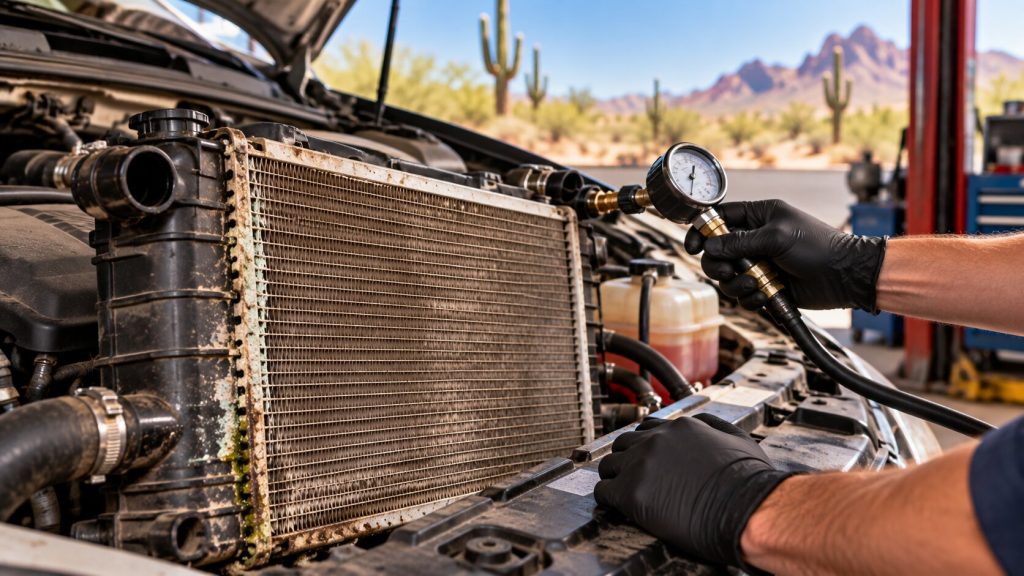
Vehicles driving through Tucson with over 100,000 miles face extreme heat cycles that rapidly accelerate internal radiator degradation. Constant exposure to desert temperatures causes plastic side tanks to become brittle and internal aluminum passages to corrode, leading to sudden cooling system failures along routes like Interstate 10 or Campbell Avenue.
Desert Temperatures Accelerate Cooling System Aging
Tucson summers create an environment where cooling systems operate near their maximum thermal capacity for months. When ambient temperatures exceed 100°F, heat-soaking raises pressure inside a radiator to 18–22 PSI to prevent coolant boiling. Higher internal pressure places continuous mechanical stress on aging PA66-GF30 (glass-filled nylon) end tanks and rubber seals, accelerating material fatigue over time.
Repeated expansion and contraction cycles eventually cause micro-cracks in these composite end tanks. As these tiny fractures expand, they turn into hairline leaks that seep coolant under high operating pressure. What begins as a minor loss of fluid can quickly turn into a total loss of pressure while idling in traffic.
Vehicle age alone does not dictate failure, but accumulated thermal cycles in dry climates certainly shorten operational lifespans. High-mileage engines also generate more blow-by heat, putting an additional workload on an already stressed cooling system.
Common Signs of Radiator Failure in High-Mileage Cars
Discolored or murky coolant inside the expansion tank is often the first visible warning sign of internal radiator degradation. Healthy coolant maintains a bright green, pink, or orange hue, whereas aged fluid turns brownish as protective corrosion inhibitors break down. This chemical breakdown allows rust, scale, and degraded plastic debris to circulate freely through narrow 1.5mm aluminum core passages.
Unusual temperature gauge spikes, especially when stopped at traffic lights or climbing desert hills, indicate compromised heat dissipation. Drivers might also notice a faint, sweet smell outside the vehicle after parking, which points to evaporating coolant on hot engine components. Drops of coolant pooling under the front bumper further confirm an active leak within the radiator core or tank seams.
- Fluid Discoloration: Rust, sludge, or oil-like film floating in the coolant overflow reservoir.
- Temperature Spikes: Unstable readings that rise quickly during idle or low-speed driving.
- Visible Seepage: White, crusty residue or wet spots along the radiator side tanks and hose fittings.
- Low Fluid Levels: Needing to top off coolant regularly without any obvious external hose leaks.
Mechanical Stress Factors Specific to Tucson Driving
Heavy city traffic in Tucson paired with airborne desert sand places extreme strain on older radiators. Fine sand and desert debris build up inside the external cooling fins, blocking critical airflow needed to lower fluid temperatures. Reduced airflow forces the mechanical or electric cooling fan to run continuously, adding extra wear to the entire cooling assembly.
Monsoon season brings sudden moisture and road debris that can impact hot aluminum surfaces, causing localized thermal shock. When cold rain hits a superheated radiator core running at 210°F, the sudden temperature shift stresses soldered joints and crimped seams. Over time, these repeated temperature shocks degrade the seal holding the aluminum core and plastic side tanks together.
Mineral deposits from using municipal tap water instead of distilled water in coolant mixtures further accelerate internal galvanic corrosion. High concentrations of calcium carbonate react with heat to form insulating scales along internal tube walls, preventing effective heat transfer. This combination of external airflow restriction and internal insulating scale leads directly to radiator replacement timing decisions.
How Advanced Testing Uncovers Hidden Radiator Leaks
My diagnostic process begins with a comprehensive cooling system pressure test to pinpoint hidden leaks. I pressurize the system to 20 PSI, slightly above its rated cap limit, while the engine is cold to inspect tank crimps, hose connections, and core seams. This test reveals small hairline cracks in the plastic tanks that only open under load before they cause a breakdown on the road.
I also utilize digital FLIR thermal imaging cameras to inspect heat distribution across the radiator surface. A healthy radiator shows a uniform temperature gradient from the inlet side to the outlet side as heat dissipates. Cold spots appearing across the core indicate blocked internal tubes where coolant can no longer flow freely, confirming the need for replacement.
- System Pressure Test: Verifies structural integrity of tanks, seams, and caps at 18–22 PSI operating load.
- Thermal Mapping: Identifies internal blockages and restricted passages by detecting temperature deltas exceeding 20°F across the core.
- Fluid Chemical Test: Checks for combustion gases in the coolant, ruling out blown head gaskets.
- Visual Inspection: Evaluates fin damage, corrosion levels, and plastic tank discoloration.
Proactive Replacement Versus Emergency Repairs
Replacing an aging radiator proactively allows vehicle owners to schedule repairs at their convenience and avoid costly towing expenses. Waiting for a complete radiator rupture often leads to severe engine overheating, which can warp cylinder heads or blow head gaskets. The cost of addressing secondary engine damage far exceeds the price of a timely radiator replacement.
High-mileage vehicles reaching 120,000 to 150,000 miles in desert climates generally sit right in the window for proactive cooling system service. Replacing worn upper and lower radiator hoses, thermostat, and coolant alongside the radiator restores system efficiency completely. Refreshing these interconnected components together saves labor costs and ensures long-term reliability.
Installing OEM-spec or heavy-duty replacement units with reinforced end tanks ensures a vehicle handles local summer heat spikes. Proper installation guarantees complete system bleeding to remove trapped air pockets that cause localized overheating. Taking a preventive approach keeps high-mileage vehicles running smoothly through the hottest Arizona summers.
Protect Your Engine Before Desert Heat Takes Its Toll
When a vehicle shows signs of cooling system wear, relying on local expertise makes all the difference for long-term reliability. At Accurate Service Auto Repair, I understand the unique demands that desert driving places on high-mileage cooling systems. I provide clear diagnostics and honest recommendations to keep every car performing safely on Tucson roads.
Prevent unexpected breakdowns and protect your engine from costly overheating damage by scheduling a comprehensive cooling system inspection today. Visit my shop at 843 S Campbell Ave, Tucson, AZ 85719 or call me directly at (520) 622-7685 to book an appointment.
Frequently Asked Questions
How long does a factory radiator typically last in desert climates?
Factory radiators in Tucson typically last 80,000 to 120,000 miles (about 7 to 10 years). Continuous exposure to 100°F+ ambient temperatures and UV rays degrades composite plastic end tanks faster than in cooler climates. Regular coolant flushes every 30,000 miles help prevent premature internal core clogging.
Can I drive my car with a small radiator leak?
No. Driving with even a small radiator leak prevents the system from maintaining required operating pressure, causing coolant to boil at lower temperatures. As coolant levels fall, engine block heat rises sharply, which can warp the cylinder head and cause total engine destruction.
Should I replace my thermostat when replacing the radiator?
Yes, replacing the thermostat alongside a new radiator is highly recommended for high-mileage vehicles. Thermostats undergo the same thermal wear and age, and installing a new one ensures proper coolant flow regulation. Doing both services at once saves on labor costs since the cooling system is already drained.
Why does my car overheat only when stopped in traffic?
Insufficient airflow through the radiator core or a failing electric cooling fan causes overheating at a stop. When moving, ram air forces heat out of the core naturally, masking internal flow restrictions or fan clutch failure that show up immediately during idle.
