

Unresolved coolant service history risks immediate radiator damage. Residual acidic fluid, tap water minerals, or mixed chemical formulations inside the engine block pollute fresh coolant, causing galvanic corrosion, gelling, and seam erosion. Complete diagnostic testing by evaluating voltage, pH, and protection levels prevents premature failure and ensures long-term cooling system reliability.
When a radiator fails on the hot asphalt of Interstate 10 during a 105-degree Tucson summer afternoon, swapping in a brand-new aluminum core only solves half the problem. When we inspect these sudden failures, we frequently find that previous owners topped off the reservoir with tap water or mixed mismatched Organic Acid Technology formulations. These improper additions trigger unseen chemical reactions that continue to degrade internal passages long after you drive away.
The Chemical and Mechanical Physics Behind Coolant Degradation
Coolant operates under normal conditions as a balanced thermal transfer fluid that prevents boil-overs while coating internal metallurgy with protective corrosion inhibitors. When fluid age exceeds service intervals or tap water with high mineral content is introduced, the protective additives deplete rapidly. This depletion allows silicate buildup to fall out of suspension or causes total chemical breakdown of the protective fluid base.
Once chemical inhibitors fail, oxygen and dissolved minerals react with bare metals to create aggressive galvanic corrosion. The fluid turns acidic, dropping below a safe pH threshold and actively stripping copper, brass, and aluminum from internal cooling passages. During high heat-soaking conditions, cavitating fluid bubbles collapse against impeller blades and core walls, pitting metal surfaces and forcing micro-fractures through internal seam welds.
When we drop a pristine radiator into a system with contaminated history, the remaining fluid inside the engine block instantly pollutes the fresh charge. Depleted chemistry begins stripping protective oxide layers off the new core immediately, accelerating erosion along the fresh aluminum tube joints.
How Professional Diagnostic Workflows Uncover Fluid Degradation
When evaluating cooling system health, we use a comprehensive diagnostic process that goes far beyond looking into the overflow tank. Catching fluid breakdown early requires measuring the exact physical and chemical properties of the chemistry inside the engine block.
- Test for Electrolysis and Voltage Potential: Placing the positive probe of a digital multimeter directly into the fluid while grounding the negative probe to the battery terminal reveals hidden stray currents. A reading exceeding 0.10 volts indicates active electrical current passing through the fluid, which erodes fresh aluminum heat exchangers within months.
- Evaluate Chemical Balance and pH Levels: We use specialized test strips to measure acidity levels and verify the fluid maintains a healthy base reading between 7.5 and 10.0. Dropping below this range indicates the fluid has turned acidic and will aggressively attack internal solder joints and rubber hoses.
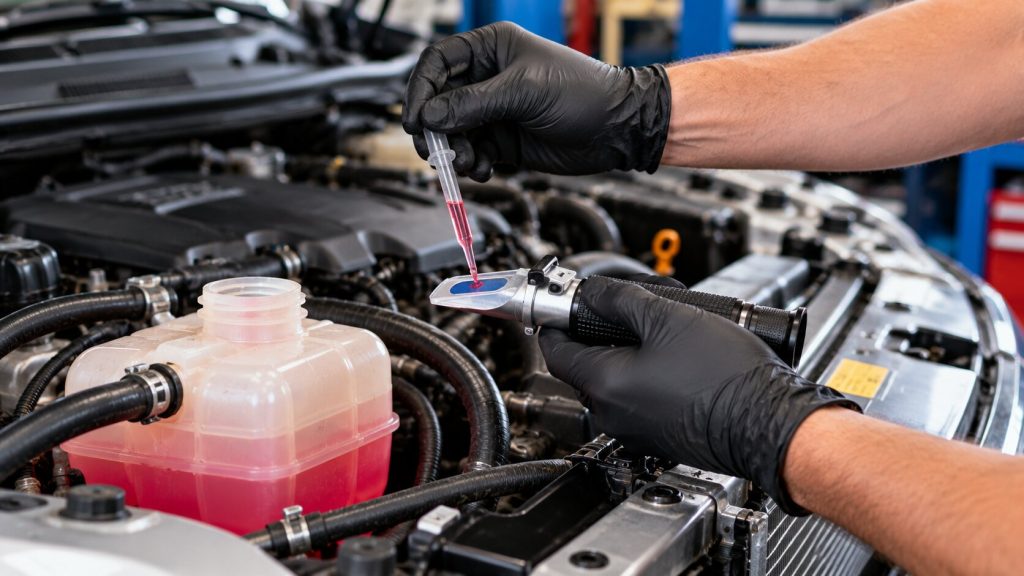
- Measure Protection Thresholds with a Refractometer: Visual inspection cannot measure glycol concentration accurately. We rely on an optical refractometer to measure light refraction and verify exact freeze and boil protection levels, ensuring the mixture resists thermal expansion during extreme desert operating conditions.
- Inspect Core Differential Temperatures: We use infrared thermometers to scan the core and map thermal distribution across the cooling grid. A temperature variation exceeding 15°F across adjacent core sections signals lingering debris or scale that survived previous repair cycles and continues to restrict flow.
Shop Floor Insight: When a vehicle comes into our shop with a pinhole leak on a 6-month-old replacement core, 9 times out of 10 our multimeter registers 0.25V to 0.40V in the radiator neck. That level of stray electrical current acts like a miniature lightning bolt in the fluid, eating through thin aluminum walls regardless of core quality.
Why Modern Cooling Engines Need Specific Fluid Formulations
Modern vehicles utilize precise metallurgy that requires matching chemical protection packages. Inorganic Additive Technology, Hybrid OAT, and pure Organic Acid Technology fluids use entirely different chemical bases to protect specific gasket materials and aluminum alloys. Mixing these chemistries causes additives to clash, forming a thick gel that plugs tiny heater core passages and starves internal engine jackets.
A detailed review of past maintenance records tells us whether the engine ran incompatible fluids that left sticky deposits behind. If legacy gelling exists inside the block, simply draining the system leaves sticky chemical residue behind to pollute fresh fluid. Identifying these historic maintenance gaps ensures we can properly neutralize the system before fresh fluid goes in.
Preventing Secondary Cooling Failures After Radiator Swaps
Installing a new core into a loop containing degraded water pump seals or particulate sludge guarantees immediate core contamination. Water pump impellers, thermostat housings, and heater cores all retain legacy fluid and particulates from prior component failures. When fresh fluid circulates, it loosens old scale and carries it straight into the narrow passages of the new core.
Reviewing service records helps us identify which secondary components were exposed to acidic fluid or overheating cycles. Replacing worn radiator caps, aging bypass hoses, and sticky thermostats alongside the core prevents sudden pressure spikes from rupturing fresh seams. Addressing the whole system history ensures the new core performs reliably for years.
Protect Your New Radiator Before Corrosion Takes Hold
Skipping a chemical flush on a contaminated engine block frequently results in repeat radiator seam ruptures within 6,000 miles. Our experienced technicians evaluate your complete cooling loop, perform precise fluid testing, and install the exact fluid formulations your vehicle manufacturer requires.
Catch stray electrical current and acidic contamination before galvanic action eats through your new aluminum core. Contact our team at Accurate Service Auto Repair today by calling (520) 622-7685 or visit us at 843 S Campbell Ave, Tucson, AZ 85719 to schedule your complete system evaluation.
Frequently Asked Questions
Why does old fluid cause new radiators to fail early?
Acidic remnants and mineral scale left inside the engine block contaminate fresh fluid immediately upon startup. This rapid chemical breakdown strips protective layers off new aluminum tubes, leading to quick corrosion and seam leaks.
Can I mix green and pink coolant if the levels are low?
No. Mixing green and pink coolant formulations causes chemical additives to react and drop out of suspension, forming a gel that clogs narrow passages and restricts fluid circulation throughout the engine.
How do technicians test if coolant has turned acidic?
Technicians use specialized pH test strips to measure acidity levels and digital multimeters to detect stray electrical currents in the fluid. These tools reveal invisible chemical breakdown before physical component damage occurs.
Should I replace my thermostat when getting a new radiator?
Yes. Replacing the thermostat during a radiator swap prevents secondary overheating, as old units frequently stick or operate out of factory tolerance after thermal overload.
