

Commercial fleets in extreme desert climates face severe mechanical stress, including turbocharger heat cycling, DPF regeneration failures, brake fade, and electrical jitter. Proactive maintenance strategies targeting regional dust, heavy terrain, and intense asphalt temperatures prevent costly downtime. Implementing advanced diagnostics, telematics integration, and routine component evaluations safeguards operational efficiency and extends heavy-duty vehicle lifespans.
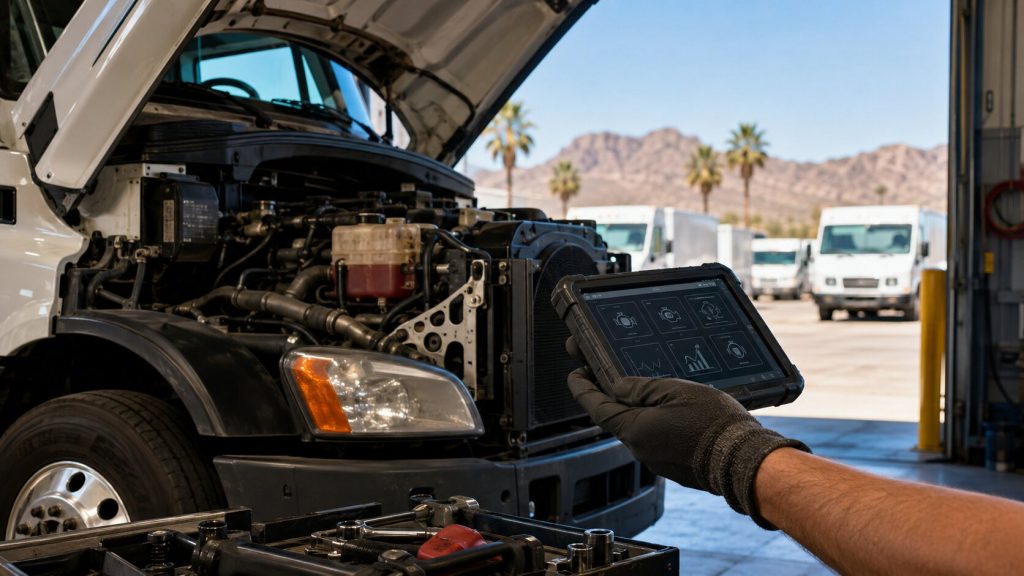
Commercial truck fleets operating across Pima County experience severe mechanical stress due to unique regional conditions. Intense summer pavement temperatures, stop-and-go delivery routes on Speedway Boulevard, and heavy mountain ascents near Saguaro National Park all accelerate component wear. Accurate Service Auto Repair provides specialized fleet maintenance from our facility on South Campbell Avenue to keep Tucson businesses moving safely.
Managing a modern commercial fleet requires a proactive approach to prevent sudden roadside breakdowns. Dust from expanding construction zones in Rita Ranch combines with high operational heat to challenge turbochargers and electrical troubleshooting modules. This guide serves as a central reference to help fleet managers identify, track, and resolve common mechanical vulnerabilities before they cause costly vehicle downtime.
What This Guide Covers
- Mitigating turbocharger heat stress and powertrain fatigue along I-10 and I-19.
- Stopping idling-induced DPF face-plugging and regeneration failures in desert climates.
- Protecting commercial drivetrains on steep mountain grades.
- Eliminating brake fade, rotor glazing, and hub wear on busy roads.
- Mapping suspension stress, tire scrubbing, and frame fatigue in local delivery zones.
- Fixing thermal CAN bus issues and leveraging diagnostics for high fleet ROI.
Powertrain & Thermal Stress on the I-10 and I-19 Corridors
Heavy-duty commercial engines face unforgiving environments when pulling maximum freight loads along major Arizona shipping routes. The continuous thermal stress of pulling maximum loads up I-10 grades subjects internal car engine repair components to extreme, rapid expansion and contraction that accelerates metal fatigue. Without targeted radiator repair intervals and clean lubrication, turbocharger assemblies and direct-injection systems suffer premature structural fatigue.
Maintaining oil film strength is particularly difficult when ambient summer temperatures exceed three digits on the pavement. In my experience working with local fleet managers, I’ve found that fine particulate matter from regional concrete plants and roadside grading projects easily bypasses degraded air filtration seals. This abrasive debris mixes with engine oil to scour bearing surfaces and compromise precision tolerances within the timing belt replacement train.
Fleet managers must implement strict automotive fluid services schedules based on route severity rather than simple mileage intervals. Shifting from open highway runs to stop-and-go downtown intersections halts airflow and traps intense thermal loads in the engine bay, baking critical electrical sensors. To protect your equipment from these extreme operating conditions, read our detailed technical analysis on How I-10 Turbocharger Heat Cycling Causes Tucson Fleet Failures.
Continuous hauling between manufacturing hubs accelerates the breakdown of variable geometry turbo vanes and actuator linkages. For information on protecting incoming logistics assets along the southern border routes, review GDI Carbon Buildup and Fleet Performance on the I-19 Corridor. Contractors can protect their heavy equipment by following the specific dust mitigation strategies outlined in Why Rita Ranch Construction Dust is Killing Your Truck’s Turbo.
Predicting mechanical failure points allows local logistics operations to schedule shop visits during off-peak delivery windows. Transitioning smooth highway runs into stop-and-go local fulfillment routes alters component wear cycles significantly. Learn how to manage these operational changes by reviewing Tucson I-10 Fleet Maintenance Predictive Downtime Control and I-19 Long-Haul Transition and Highway-to-City Wear Patterns in Tucson.
Emissions Control, DPF Lifespan, and High-Idle Fatigue
Modern diesel emissions systems require specific thermal thresholds to burn off accumulated particulate matter effectively. Running short delivery routes through the Foothills keeps exhaust temperatures too low to initiate passive regeneration, causing rapid soot buildup in the filter. This leads to rapid soot accumulation within the diesel particulate filter, causing excessive backpressure and reduced fuel efficiency.
Sitting at a high idle during summer months creates a dangerous mechanical mismatch: engine heat drops too low for clean combustion, yet high auto air conditioner demands strain the engine. This operational imbalance causes incomplete fuel combustion, coating the exhaust gas recirculation valves in thick, sticky carbon deposits. Over time, these blockages trigger immediate check engine light commands that stall deliveries and require manual shop cleanings.
Landscaping and utility fleets that spend hours running power take-off equipment at job sites face the highest risk of emissions failure. These vehicles require specialized maintenance intervals that account for engine run hours rather than odometer readings. For a complete assessment of these operational strains, read Oro Valley Landscaping Fleet Heat Stress and Idle Fatigue Analysis.
Neglecting these warning signs leads to irreversible face-plugging of the expensive filter substrate, forcing total unit replacement. Fleet operations running regional routes can find tailored survival strategies by studying Why Short Foothills Commutes Lead to DPF Regen Failure in Tucson. Discover how to balance local traffic challenges against emission health by reviewing Tucson Diesel Fleet DPF Lifespan vs. Valencia Road Idle Fatigue.
The integration of complex selective catalytic reduction systems introduces more failure points when exposed to continuous high ambient heat. Defective diesel exhaust fluid pumps and crystallized injector nozzles disrupt the chemical balance required to neutralize harmful nitrogen oxides. Keep your fleet compliant with strict regional environmental standards by reading Next-Gen Diesel Emissions vs. Tucson Extreme Heat.
Desert Transmission Dynamics and Extreme Terrain Grades
Transmission fluid acts as both a lubricant and a vital cooling medium within heavy-duty commercial gearboxes. Pulling fully loaded trailers past Saguaro National Park places immense strain on torque converters, pushing internal fluid temperatures toward dangerous thresholds. If the fluid surpasses its maximum thermal rating, the protective chemical additives shear down, leaving gear teeth vulnerable to direct metal friction.
High operating temperatures harden and crack internal rubber seals, bleeding off hydraulic pressure and causing the transmission clutches to slip. Once slipping begins, the transmission generates even more friction heat, accelerating total component destruction within a matter of miles. Regular fluid flushes and external auxiliary cooler inspections are mandatory safety precautions for any vehicle tackling regional desert ascents.
Sustained low-speed driving through residential expansion areas forces frequent gear hunting between second and third ratios. Rapidly shifting through gears spikes internal valve body temperatures, which disrupts precise hydraulic timing and creates harsh, slam-like gear engagements. For a full breakdown of financial trade-offs during major driveline failures, see Transmission Repair vs Replacement Tucson Fleet Costs Near I-10.
Managing high-mileage assets requires understanding how heavy cargo weights interact with continuous mountain topography. Fleet managers must train operators to spot early warning flags such as burnt transmission fluid, delayed gear engagement, and strange pump whining. Explore how terrain challenges alter gearbox life cycles by reviewing Transmission Heat vs. Saguaro National Park Desert Grades.
The starter motor and flywheel assembly also suffer when trucks operate under maximum weight limits in challenging environments. Frequent engine restarts at delivery points combined with high ambient engine bay temperatures degrade starter solenoid windings. Learn to diagnose these starting system issues early by reading Flowing Wells Truck Engine Load and Starter Health 2026.
High-Heat Braking Dynamics and Severe Stop-and-Go Wear
Heavy commercial trucks face extreme thermal demands when slowing down on downhill mountain routes and high-traffic main city roads. When I consult with fleet owners, I always emphasize that continuous braking cycles on roads like Oracle Road generate extreme thermal friction, crystallizing the friction material lining and inducing severe brake fade. To combat this, we use advanced thermal-resistant friction materials at our shop to protect your stopping capability under heavy cargo loads.
Delivering goods safely across town requires regular evaluation of pad wear patterns, rotor thickness, and caliper fluid integrity. In regional maintenance logs, Tucson Mall Delivery Brake Wear and Oracle Road Heat serve as prime examples of how localized retail traffic patterns accelerate component degradation. To extend component life cycles on these high-stress routes, review our specific optimization tips in Optimizing Brake Lifespan on Speedway Boulevard Delivery Routes.
Managing heat dissipation becomes critical during summer months when ambient temperatures spike significantly. For a detailed breakdown of how localized heat impacts specific vehicle setups, read Fixing Oracle Road Brake Fade Oro Valley’s Thermal Solution. Consistent system checks keep your drivers safe and reduce overall operational expenses.
High brake temperatures also transfer directly into the wheel hubs, degrading wheel bearing grease and damaging critical ABS wheel speed sensors. When hub grease liquifies from extreme heat, it can leak onto the braking surfaces, completely destroying friction capabilities. This chain reaction turns a simple maintenance oversight into an immediate road hazard for loaded commercial vehicles.
Air brake systems must also be monitored for moisture accumulation, which can boil under extreme operating temperatures and introduce air pockets into the lines. Regular draining of the air reservoirs and timely replacement of the air dryer cartridge prevent these hydraulic anomalies. Keeping these support systems operating smoothly ensures consistent pedal response when your drivers need it most.
Heavy-Duty Suspension Stress and Chassis Structural Integrity
The physical infrastructure across specific Pima County delivery zones places high stress on commercial suspension systems. Deep asphalt ruts, unpaved staging yards, and sunken utility access points force shock absorbers to work double-time under heavy loads. Overloading a vehicle even slightly multiplies these kinetic impacts, bending leaf springs and blowing out heavy-duty rubber bushings.
When suspension components sag, they alter the steering geometry, causing the front tires to scrub against the pavement. This misalignment rapidly destroys expensive commercial tire tread, creating uneven wear patterns that invite dangerous roadside blowouts. Regular chassis lubrication and bushing inspections help distribute structural loads evenly, preventing localized metal fatigue across the frame rails.
Utility fleets running heavy service beds face unique center-of-gravity challenges when navigating compromised road surfaces. Constant body roll strains anti-sway bar links and loosens U-bolts holding the axle housings to the spring packs. Read how regional road infrastructure degrades fleet chassis structures by analyzing Suspension Stress Mapping vs. Drexel Heights Road Conditions.
Failing to address minor suspension rattles leads to severe vibrations that loosen interior dash panels and damage sensitive electronic components. A stable chassis provides a safe working environment for your operators while protecting fragile cargo from impact damage. For a complete look at tire failure logic in heavy work environments, read Drexel Heights Utility Fleet Tire and Suspension Failure Logic.
Axle alignments should be scheduled alongside every major oil change service to verify that tracking angles remain perfectly true. Even a minor two-degree deviation drags the rear tires sideways, increasing rolling resistance and dropping fuel economy numbers across the fleet. Proactive physical inspections keep your operational costs predictable and extend the working life of your rolling stock.
Advanced Fleet Telematics, Electrical Jitter, and Smart Diagnostics
Modern commercial trucks rely on complex Controller Area Network systems to transmit critical operating data between onboard computers. When summer temperatures top 110 degrees, brutal radiant heat from the asphalt can trigger internal timing faults within vulnerable alternator replacement modules. This electrical jitter corrupts sensor data packets, triggering false diagnostic trouble codes and forcing unnecessary vehicle shutdowns.
Intermittent faults are notoriously difficult to isolate because they often disappear once the vehicle cools down inside a repair bay. Technicians must utilize car battery testing to capture live electrical waveforms while the truck is operating under full load. Isolating these ghost errors prevents expensive parts-swapping and keeps your diagnostic bills manageable.
Integrating predictive telematics platforms allows fleet dispatchers to monitor oil pressure, coolant temperatures, and exhaust metrics in real time. This constant data stream alerts management to thermal anomalies before they escalate into catastrophic component failures on the highway. Learn to utilize these digital tools by reading Telematics Data Mapping vs. Tucson Highway Fleet Failure Prediction.
Unstable voltage supplies can destroy delicate injector driver circuits within the main engine control module. For an expert look at preserving digital communication integrity within your logistics assets, explore CAN Bus Communication Failures in High-Traffic Tucson Delivery Zones. Review the underlying causes of heat-induced wiring degradation by analyzing Why 145°F Asphalt & PWM Jitter Kill University Fleet Trucks.
Transitioning away from reactive repair models toward automated diagnostic monitoring drastically reduces unexpected operational overhead. To see how machine learning algorithms identify subtle wear patterns in commercial hardware, check AI Commercial Truck Repair and Fleet Diagnostics in Tucson AZ. Understand how smart infrastructure projects protect highway assets by reviewing Real-Time Smart Sensor Integration for Tucson’s I-10 Commercial Corridor.
Maintaining comprehensive, cloud-based service histories simplifies regulatory compliance tracking while proving vehicle value during asset liquidations. For a look at optimizing administrative workflows through digital record keeping, read Digital Fleet Records vs. Tucson Desert Logistics. See how real-time sensor updates protect heavy loads under maximum thermal duress by reviewing Connected Fleet Telematics for Loaded Trucks on Hot Tucson Highways.
Seasonal temperature swings require immediate adjustments to fluid choices and preventative maintenance parameters. For actionable advice on tracking diagnostic data alongside variable fuel expenditure reports, study Tucson Fleet Diagnostics vs. Interstate 10 Fuel Costs. Learn how to protect your bottom line against early spring weather fluctuations by reading Tucson Fleet Maintenance Strategy vs. April Temperature Swings.
Isolating intermittent warning signals before they trigger costly roadside breakdowns remains the most effective way to secure high operational returns. To learn how local fleet operators construct custom desert survivability matrices, read Tucson Fleet Predictive Maintenance Models for Severe Desert Heat. Discover the direct financial benefits of structured vehicle tracking plans by exploring Tucson Fleet Maintenance ROI and Preventing the 10k Engine Failure.
Maintaining explicit proof of regular computer calibrations and physical sensor updates builds buyers’ trust during asset upgrades. For a thorough guide to maximizing the salvage and resale value of older work assets, check Optimizing High-Mileage Work Truck Resale Value in Tucson. Review the complete list of electrical diagnostic codes and how to fix them permanently by opening Solving Intermittent Fault Codes in High-Mileage Tucson Trucks.
Professional Commercial Truck Service and Fleet Evaluation in Tucson
Protect your business assets and minimize unexpected road delays by scheduling a professional fleet evaluation. Accurate Service Auto Repair provides complete diagnostic support, advanced telematics integration, and heavy-duty mechanical service for all classes of commercial trucks in Tucson. Call our team directly at (520) 622-7685 or visit our shop at 843 S Campbell Ave, Tucson, AZ 85719 to establish a customized preventative maintenance program for your vehicles today.
Frequently Asked Questions
Why do diesel emission systems fail frequently during Tucson summers?
Extreme ambient temperatures combined with low-speed idling prevent exhaust systems from reaching optimal heat for passive cleaning cycles. This structural limitation causes rapid soot accumulation and forces frequent active regenerations, which strains hardware and shortens component lifespans. Establishing a proactive maintenance plan remains the most reliable way for local operations to prevent these heat-related emission failures.
How does regional terrain affect commercial truck transmissions in Pima County?
Heavy hauling up steep desert inclines causes transmission fluid to degrade quickly due to intense thermal friction. As internal temperatures rise, critical rubber seals harden and crack, leading to internal pressure drops that cause clutch plates to slip. Routine fluid analysis and auxiliary cooler checks are essential safeguards against costly clutch slippage and catastrophic on-road transmission failures.
What causes intermittent electrical faults in high-mileage desert delivery fleets?
Intense radiant heat rising off asphalt pavements damages sensitive wiring harnesses, creates pulse-width modulation jitter, and disrupts critical control module communications. These complex issues usually appear as temporary fault codes during peak daylight hours when surface temperatures peak. Technicians must utilize specialized data loggers to capture live electrical waveforms while the vehicle operates under full load conditions.
How often should local commercial fleet vehicles undergo comprehensive brake inspections?
High-cycle urban delivery vehicles require monthly service intervals to evaluate friction material degradation and the thermal depolymerization of hydraulic brake fluid. High brake temperatures can transfer directly into the wheel hubs, liquefying bearing grease and damaging critical electronic wheel speed sensors. Regular system flushes and timely component replacements preserve a firm, dependable brake pedal feel when it matters most.
How does fine silica dust from local job sites damage commercial turbochargers?
Abrasive particulate matter from regional concrete plants and active grading zones can easily bypass compromised intake filtration seals. Once inside the intake tract, these sharp particles scour the precision turbine blades and compromise the tight internal bearing clearances. Over time, this continuous physical degradation leads to premature shaft play, boost pressure loss, and catastrophic turbocharger housing failures.
