

Tucson’s extreme heat degrades radiators, causing core clogs, pressure loss, and severe overheating. Ignoring a compromised radiator risks warped cylinder heads and blown head gaskets. Professional pressure testing, thermal scanning, and a timely radiator replacement service safeguard vital engine components, preventing costly mechanical failures and full overhauls.
Family SUV Radiator Maintenance For Tucson Neighborhood Driving
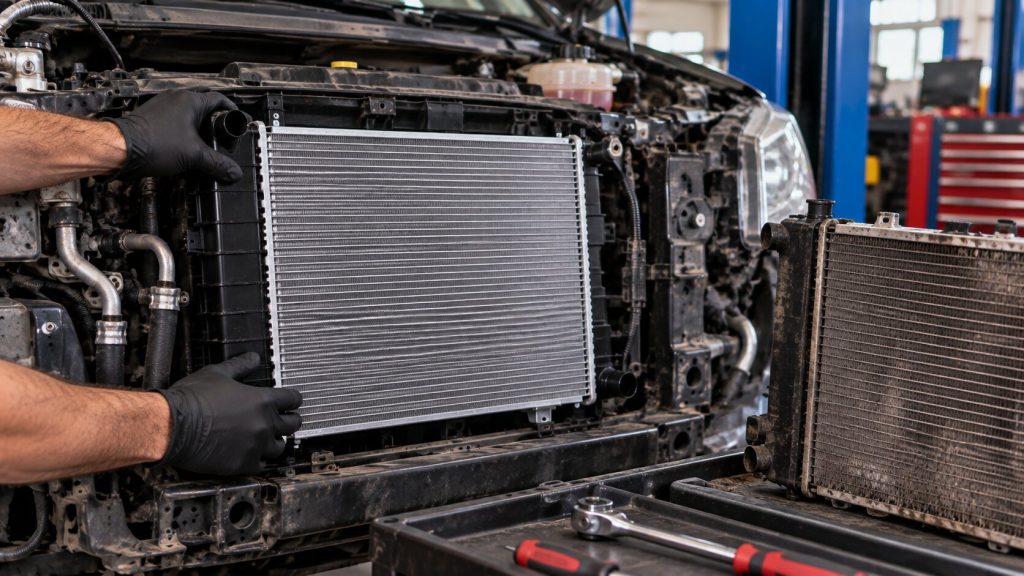
A failing radiator is the primary thermal bottleneck forcing your engine to absorb destructive heat. Crawling along I-10 near Campbell Ave or idling on Speedway Blvd in 112°F ambient heat forces the cooling fan to run continuously, pushing system pressure past 1.2 Bar. When cooling efficiency drops during these triple-digit Tucson summers, trapped heat warps aluminum cylinder heads, destroys head gaskets, and causes total engine failure. Booking a radiator replacement service before thermal runaway occurs saves thousands in secondary engine repairs.
Why Cooling Systems Strain Under Southwestern Heat
Your cooling system operates under extreme thermal stress, but Tucson’s desert climate drastically shortens the lifespan of plastic end tanks and aluminum cores. Prolonged exposure to ambient heat exceeding 105°F stops passive heat dissipation across core fins. Constant expansion and contraction cycles degrade the radiator’s glass-filled nylon end tanks, creating micro-cracks along the crimped aluminum seams.
Monsoon season creates a severe physical catalyst for cooling failure. Fine desert dust mixes with rain to form an abrasive mud slurry that bakes onto external radiator fins, reducing airflow by up to 40%. Additionally, high thermal cycling depletes protective silicates and organic additives in your coolant within 24 months. Once anti-corrosion additives break down, galvanic corrosion eats through internal core tube walls from the inside out.
How Radiator Degradation Leads to Severe Engine Overheating
When internal core passages clog, oil temperatures spike past 250°F, thinning engine oil below its safe functional viscosity. Without adequate film strength, friction between pistons, rings, and cylinder walls generates rapid, destructive mechanical heat. The cast iron or aluminum block and the aluminum cylinder head expand at different thermal rates. This differential expansion shears the mechanical seal of the head gasket, dumping high-pressure combustion gases directly into the cooling jacket.
FLIR thermal scanning reveals internal tube restrictions when temperature deltas exceed 25°F between the inlet tank (typically 210°F) and the lower outlet tube (below 165°F). Combustion gas entering the cooling jacket creates localized steam pockets around the cylinder walls. These air pockets act as thermal insulators, causing local metal temperatures to spike above 350°F. Piston rings seize in their grooves, valve seats drop from the cylinder head casting, and the head warps past the allowable 0.002-inch tolerance, requiring a full engine teardown.
Critical Warning Signals Your Radiator Is Failing
Identifying cooling efficiency loss before the temperature needle pegs into the red prevents catastrophic core damage. Engines signal cooling breakdown well before setting a check engine light on the dash:
- Persistent Sweet Odor: A distinct ethylene glycol smell coming from the front grille after running up the Catalina Highway indicates micro-leaks vaporizing on hot aluminum.
- Low Coolant Warnings: Needing to top off your reservoir every few weeks without visible ground puddles points to slow pressure leaks or internal evaporation through seam micro-fissures.
- Discolored Coolant Sludge: Dark brown or gelled coolant indicates advanced additive breakdown, internal core rust, or transmission cooler wall cross-contamination.
- Visible Crust or Flaking: Heavy white or green oxide crusting around the core-to-tank crimp seams signals active high-pressure leaks.
- Temperature Spikes at Stoplights: A needle that creeps up while idling at traffic lights on Oracle Road but drops once cruising at 50 mph indicates restricted internal core tubes or loss of fan-driven airflow.
The Hidden Costs of Delaying Cooling Repairs
Ignoring a leaking or restricted radiator turns a routine repair into a major mechanical rebuild. Investing in a timely radiator replacement service costs a fraction of fixing the secondary engine damage caused by overheating.
- Heater Core Rupture: Trapped cooling system pressure over 20 PSI can burst the interior heater core, spraying hot fluid into the cabin and ruining carpet and electronics.
- Warped Cylinder Heads: Heat-distorted aluminum heads require costly machine shop resurfacing or full replacement, along with mandatory single-use torque-to-yield head bolts.
- Blown Head Gaskets: Replacing a head gasket requires pulling the intake manifold, timing cover, and cylinder head, drastically multiplying repair labor hours.
- Cracked Engine Blocks: Severe thermal shock splits engine block metal near the cylinder walls, making a complete replacement engine mandatory.
- Transmission Destruction: Internal failure of the integrated transmission fluid cooler dumps coolant into the transmission, destroying the clutch friction plates within miles.
Diagnostic Procedures for System Integrity
When assessing a vehicle, I perform a thorough diagnostic sequence that goes far beyond checking expansion tank fluid levels:
- System Pressure Decay Testing: I attach a manual pressure pump to the radiator filler neck and pressurize the system to 18 PSI for 15 minutes to spot seam micro-fissures, hose pore leaks, or hairline tank cracks.
- Chemical Combustion Leak Testing: Sampling air from the upper radiator neck with a chemical block tester checks for carbon monoxide, confirming whether internal pressure spikes have already blown the head gasket.
- Infrared Thermal Core Scanning: Using a FLIR thermal imager while the engine runs at 2,000 RPM highlights specific cold spots across the core, proving internal tube blockages.
- Coolant Voltage Testing: A digital multimeter placed in the coolant checks for stray voltage exceeding 0.10 volts DC, confirming active galvanic corrosion eroding core walls.
Professional Cooling Service in Tucson
Tucson’s severe summer heat demands a fully functional cooling system. If you spot fluid loss, temperature spikes, or crusting along the radiator seams, perform a pressure test and thermal scan immediately to prevent blown head gaskets. Protect your engine before temperatures peak by scheduling a complete cooling system evaluation and radiator replacement service with my team at Accurate Service Auto Repair, located at 843 S Campbell Ave, Tucson, AZ 85719.
Frequently Asked Questions
Can I drive my car with a leaking radiator if I keep topping off the coolant?
No. Driving with a leaking radiator prevents the system from building its required 15 PSI pressure threshold. Without system pressure, coolant boils at a lower temperature, creating localized air pockets that cause cylinder head warping within minutes even if the overflow tank appears full.
How often should I replace my vehicle’s radiator in Tucson?
Most original equipment radiators last 70,000 to 90,000 miles in desert climates before plastic end tanks turn brittle and crack. Performing a complete coolant flush every 30,000 miles preserves the anti-corrosion additives that protect internal core passages.
What is the difference between a radiator flush and a radiator replacement service?
A radiator flush removes loose scale and degraded fluid from a structurally sound radiator. A complete radiator replacement service removes and replaces the entire core and end-tank assembly when internal tube blockages, cracked plastic tanks, or blown seam welds prevent proper fluid flow.
Does my engine temperature rise only when standing still at a red light?
Yes, this specific symptom indicates restricted internal radiator core tubes or a failing cooling fan module. When your vehicle stops moving, passive airflow drops to zero, relying entirely on clean core passages and the fan to pull heat away from the engine.
